
Last updated October 30, 2026
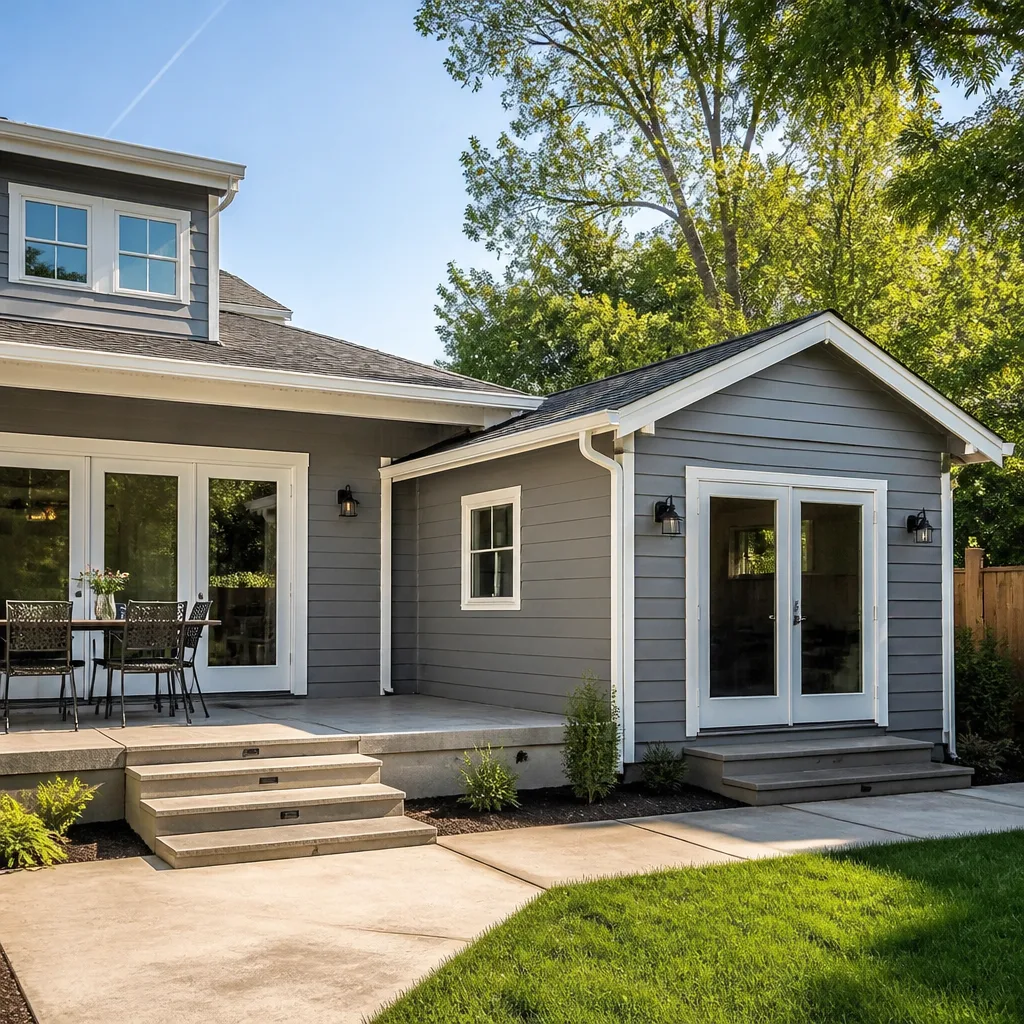 Home additions & ADU
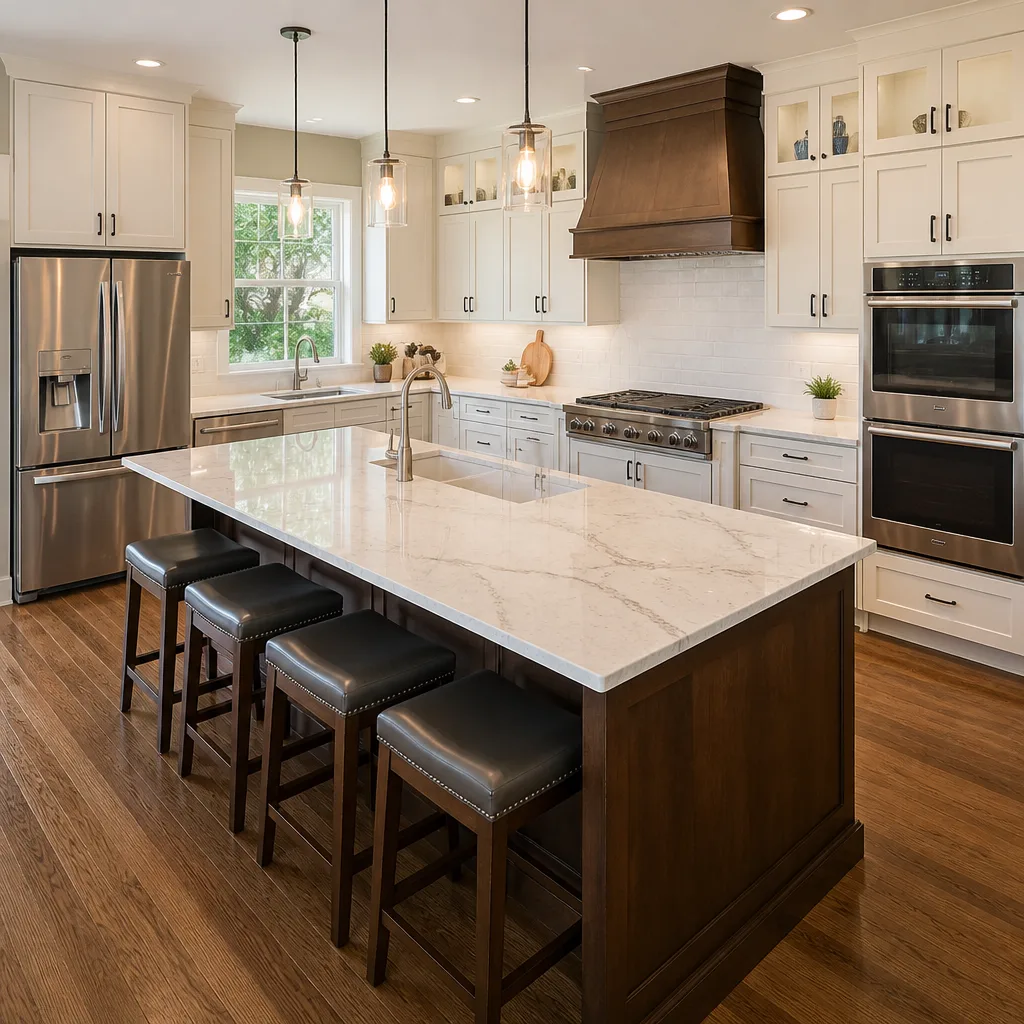 Kitchen remodeling
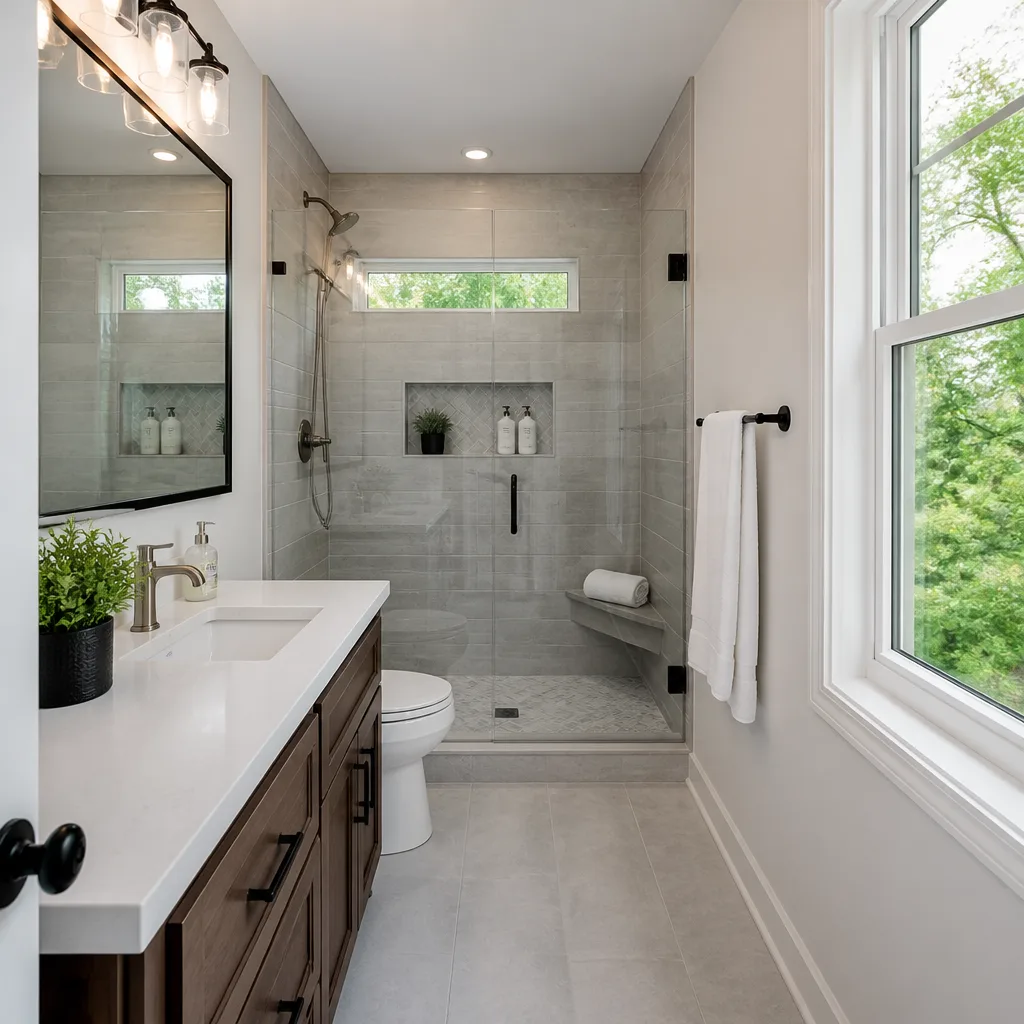 Bathroom remodeling
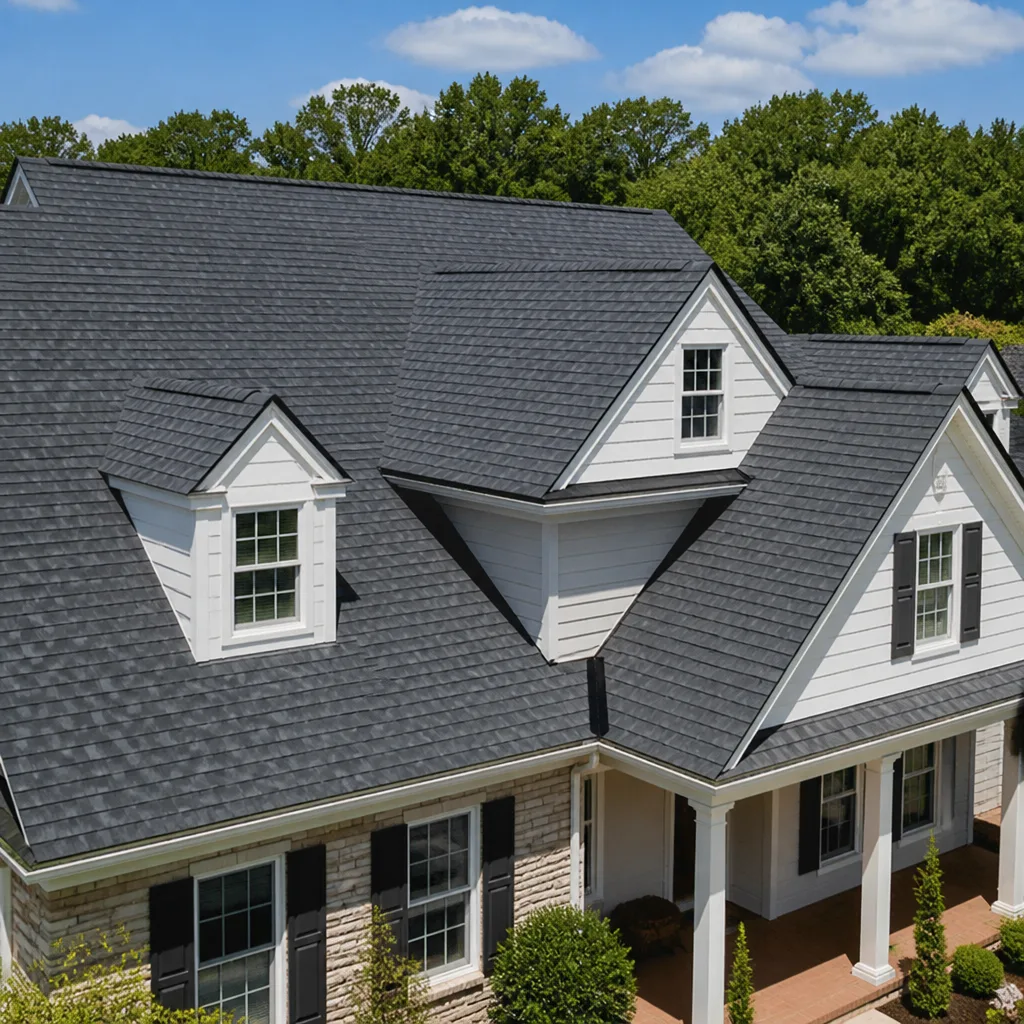 Roofing
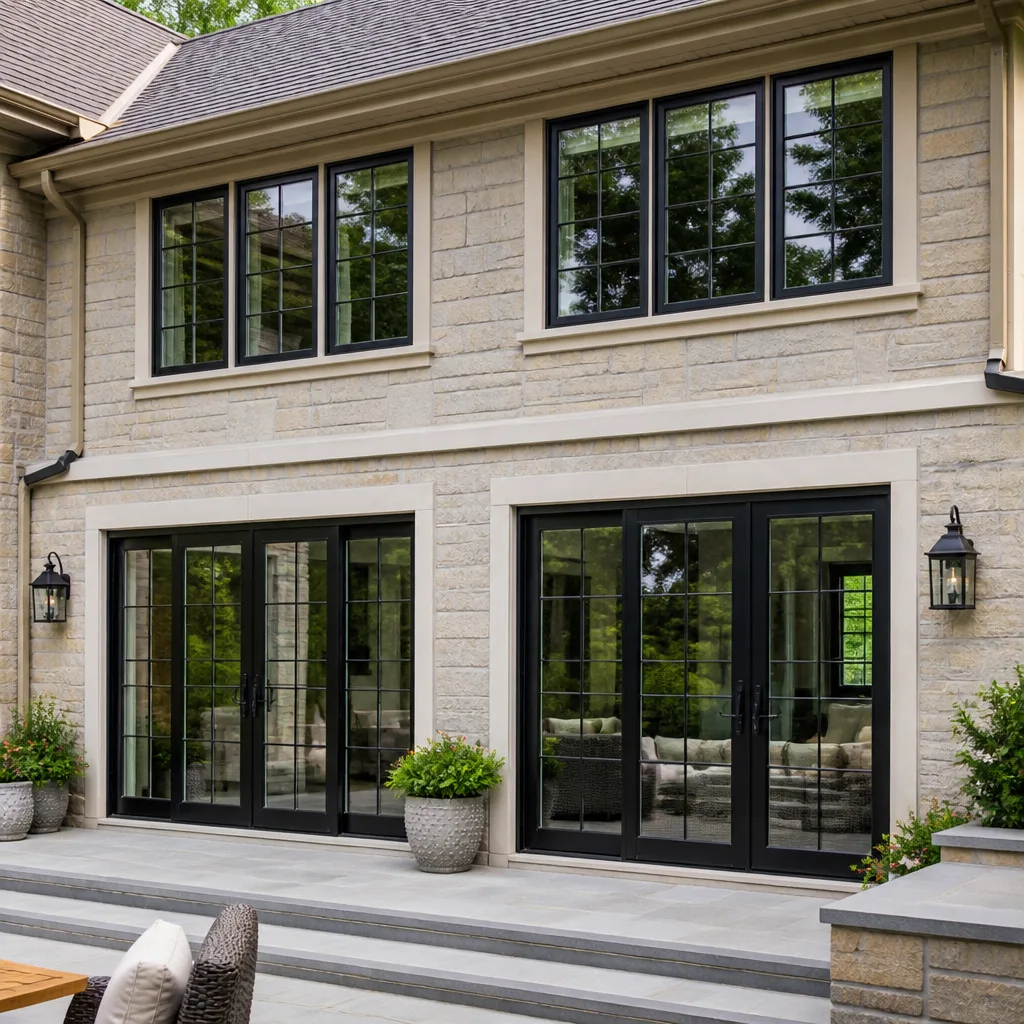 Windows & doors
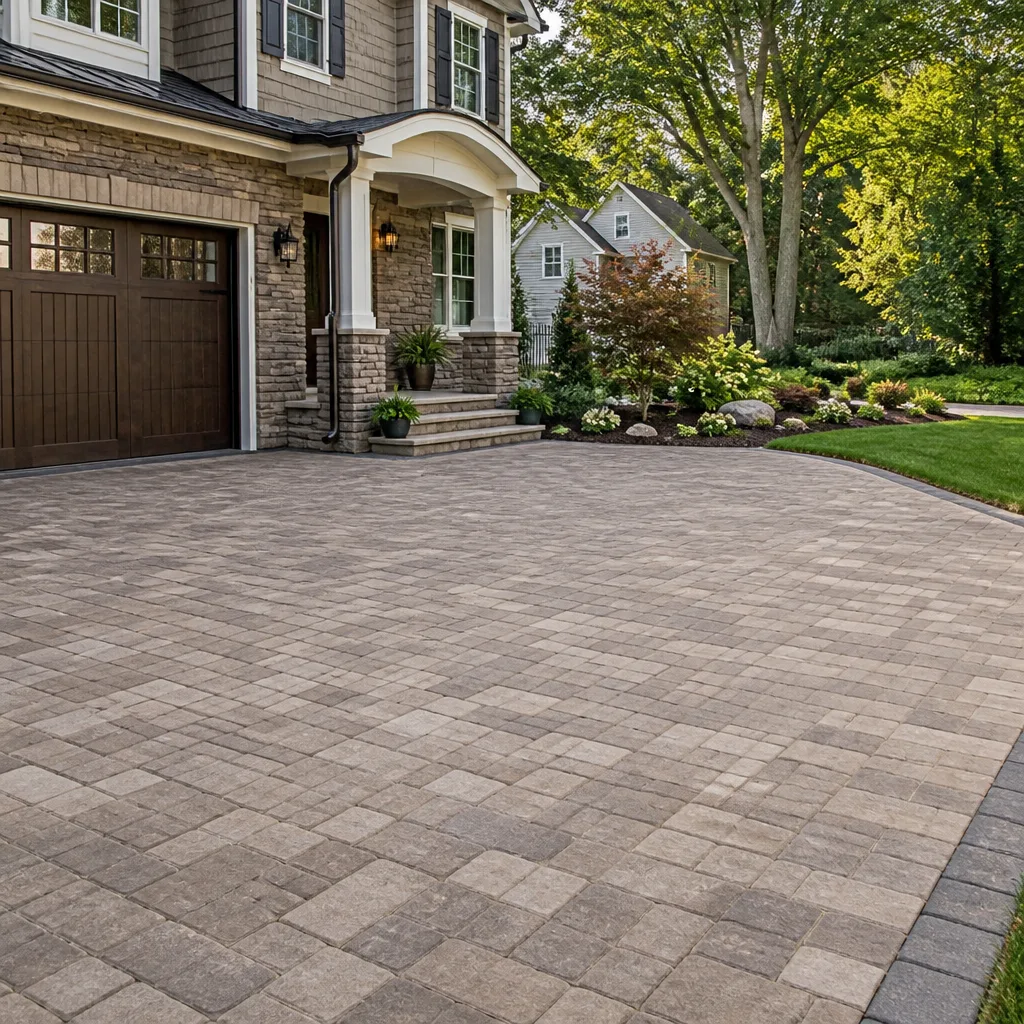 Driveway & pavers
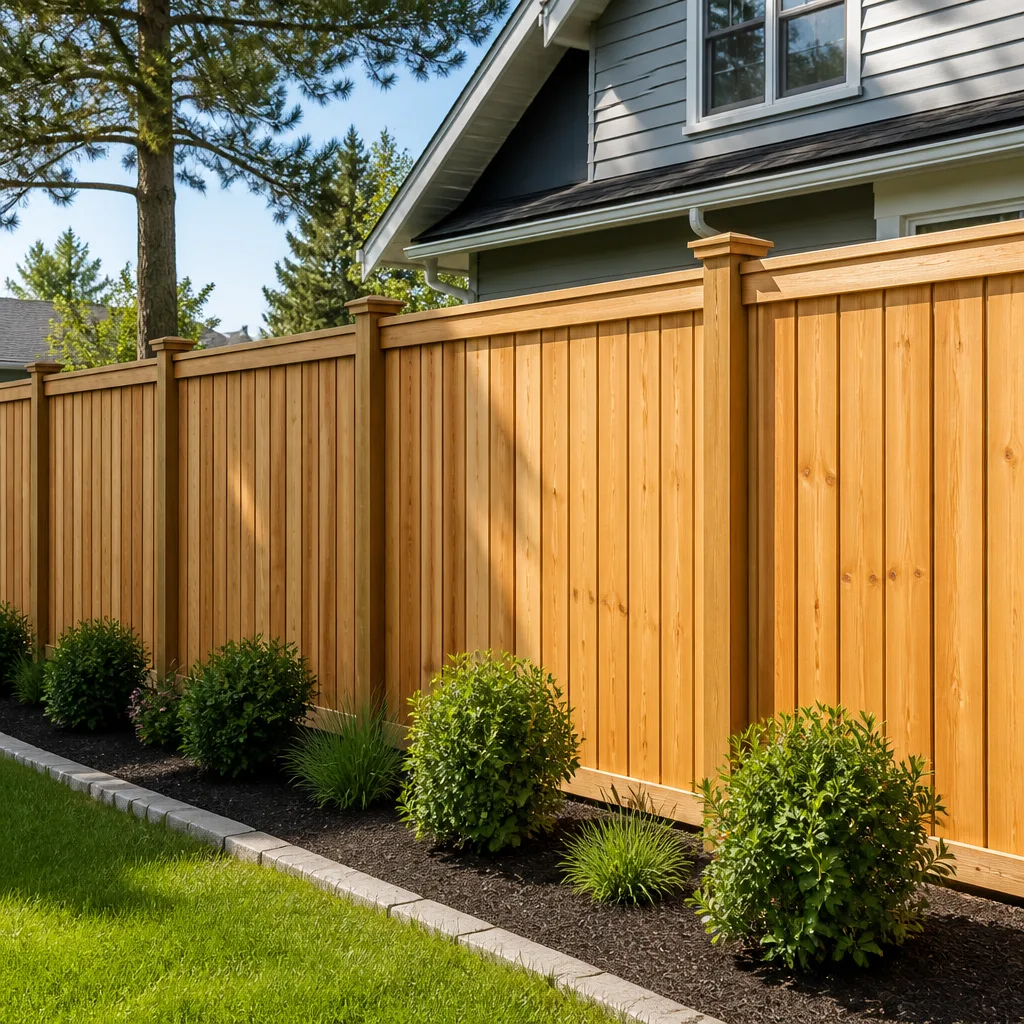 Fence
Free written scope consultation - allowances, timeline, and change-order rules on paper before a single trade is scheduled
The Complete General Contractor Guide for Fontana Homeowners
Fontana processed over 4,000 residential building permits in a single recent year, and a significant share of delayed projects share one thing in common: the homeowner didn’t know what to ask before signing. This guide is the antidote. We’ll walk you through how Fontana’s Building and Safety Division actually operates, what separates a legitimate general contractor from a specialty sub with a magnetic truck sign, how to read a contract, and why the brands your contractor can access matter more than the square-footage price they quote. If you’re planning a roof, a kitchen, an ADU, or a full exterior transformation in Fontana, this is The Complete Guide to Construction in Fontana to read before you write the first check.
Quick Answer
A general contractor in Fontana is a state-licensed (Class B) professional who legally coordinates multiple trades: framing, electrical, plumbing, roofing, and more. Hiring one is the only compliant way to run a project that touches more than two trades, and the right GC should hold a valid CSLB license, carry workers’ compensation insurance, hold a Fontana business license, and be able to pull permits through the City of Fontana Building and Safety Division without drama. Expect to pay between $180 and $350 per square foot for a mid-range remodel in Fontana, with whole-home projects running higher based on finish selection.
Styles & brands we work with
Table of Contents
- How Fontana’s Permit Office Actually Works
- B-License vs. Specialty Contractor: Why It Matters
- How to Vet a Contractor Before You Sign
- What a Properly Scoped Contract Looks Like
- Why Brand Partnerships Affect Your Price and Timeline
- Fontana Soil, Climate, and What They Mean for Your Build
- ADUs in Fontana: The Shortcut Most Homeowners Miss
- Common Mistakes to Avoid
How Fontana’s Permit Office Actually Works
Fontana’s Building and Safety Division operates under its own municipal code, which differs from what you’ll encounter in Rialto, Rancho Cucamonga, or unincorporated San Bernardino County. The city requires permits for most work beyond cosmetic finishes: structural changes, window replacements that alter openings, re-roofs, electrical panel upgrades, and any ADU construction. Roofing permits in Fontana typically process within 7 to 14 business days when plans are clean and complete. ADU permits, depending on whether you’re using a pre-approved plan set or custom drawings, can take anywhere from 3 to 8 weeks. Room additions usually land in the 4 to 10 week range if no zoning variances are involved.
The practical takeaway: whoever you hire should know these timelines cold. A contractor who tells you they can start framing next week without a permit in hand is either planning to work illegally or has never pulled a permit in Fontana. Both should disqualify them. Ask directly: “When was the last time you pulled a permit through Fontana Building and Safety, and how long did plan check take?” If the answer is vague or the timeline they quote is wildly optimistic, that’s a signal.
In our experience, the difference between a 4-week delay and a 2-week approval often comes down to plan quality. Fontana’s plan reviewers check for specific details: Title 24 energy compliance, proper shear wall notation, and drainage calculations that account for Fontana’s clay-heavy soils. A contractor who has worked in Fontana before submits plans with these details in place the first time. A contractor from outside the area learns by rejection.
B-License vs. Specialty Contractor: Why It Matters
California issues different license classes through the Contractors State License Board (CSLB). A Class B General Building Contractor can legally contract for projects involving two or more unrelated trades. A Class C specialty contractor, by contrast, is limited: a C-39 roofer can roof, a C-54 tile contractor can tile, but neither can legally supervise your kitchen remodel if it involves plumbing, electrical, and cabinetry. This isn’t a technicality. If a specialty contractor runs your whole project and something goes wrong, you may have limited recourse because they were working outside their license scope from day one.
Fontana projects almost always cross trade boundaries. A roof replacement often includes fascia repair and gutter work, which means carpentry. A kitchen remodel includes plumbing, electrical, drywall, and tile. A room addition touches everything from foundation to roofing. These are precisely the projects that legally require a general contractor to coordinate. The General Contractor in Fontana you choose should hold a current Class B license, and you should verify that license yourself on the CSLB website before signing anything.
The bigger issue is accountability. When you hire a GC, that person or company owns the entire schedule: who shows up when, what order the trades work in, who fixes the drywall when the plumber cuts a hole in the wrong spot. When you hire a specialty contractor to “manage” subs they can’t legally supervise, you become the de facto GC. You’re the one calling the electrician on a Tuesday morning to ask why nobody showed up. For a Fontana homeowner spending $50,000 or $200,000, that’s not a role you want.
How to Vet a Contractor Before You Sign
Reviews tell you whether past clients liked the finished product. They don’t tell you whether the contractor pays their subs, carries current workers’ comp, or has a license that’s suspended pending a complaint. Those are the things that actually blow up projects. Here’s the vetting sequence we recommend for any Fontana homeowner, in order:
- Verify the CSLB license. Go to the CSLB license lookup page, enter the license number, and check three things: the license class is B (General Building), the status is active (not suspended or expired), and the business name on the license matches the name on the contract. In Fontana, you’re also checking that the contractor’s license classification covers the full scope of your project.
- Request a workers’ compensation certificate. Any contractor with employees is required to carry workers’ comp in California. If a contractor is a sole proprietor with no employees, they can file for an exemption, but that means any “helper” on your job site is uninsured. Ask for the certificate and call the carrier to verify it’s current.
- Check the Fontana business license. The City of Fontana requires contractors performing work within city limits to hold a current Fontana business license. This is separate from the CSLB license. A contractor who hasn’t bothered to get one is signaling they don’t work in Fontana regularly.
- Ask for two references from projects completed in the last 12 months. Not five years ago. Not in another state. Recent Fontana projects, ideally in your neighborhood or a similar one. Call the references and ask the uncomfortable questions: Was the schedule accurate? Did the final price match the estimate? Did subs get paid on time?
- Pull a building permit history. The City of Fontana keeps records of permits pulled by contractor name. A contractor with a thin or nonexistent permit history in the city hasn’t done much legitimate work here. This isn’t necessarily disqualifying if they’re new, but it shifts the burden: they need to prove themselves another way.
This process takes about 45 minutes of phone calls and website checking, and you can find more guides & resources on our blog. For a five-figure or six-figure project, that’s the best hourly rate you’ll ever earn.
What a Properly Scoped Contract Looks Like
Most Fontana homeowners sign contracts that are essentially a price and a handshake. A properly scoped contract for a whole-home project should specify materials by brand and model, break the project into phases with associated payments, and detail what happens when something changes. Here’s what to look for:
- Material callouts by brand and model. “Kitchen cabinets” is vague and lets the contractor substitute builder-grade boxes without telling you. “Wellborn cabinetry, Hanover door style, maple, painted finish” is specific. Our Home Remodeling in Fontana work includes line-item brand selections: Cambria or Silestone for countertops, Kohler or Toto for fixtures. If your contract doesn’t name the brands you discussed, you haven’t agreed on what you’re buying.
- A payment schedule tied to milestones. California law caps the down payment for home improvement contracts at 10% of the job total or $1,000, whichever is less. After that, payments should track completed phases: demo complete, rough plumbing and electrical inspected, drywall up, cabinets installed, final inspection passed. Never agree to large upfront payments for materials that haven’t been ordered or delivered.
- A change order clause. Fontana remodels almost always uncover something: termite damage in a wall, a foundation crack, old wiring that needs to be brought to code. The contract should state that any change to scope or price requires a written change order signed by both parties before work proceeds. Verbal changes are how a $45,000 kitchen becomes a $60,000 kitchen.
- Permit and inspection responsibility. The contract should clearly state that the contractor is responsible for pulling all necessary Fontana permits and scheduling all required inspections. If it doesn’t, you’re the one who’ll be standing in line at City Hall.
- Warranty terms in writing. California requires contractors to provide a warranty of at least one year on labor. Materials carry their own manufacturer warranties. A professional Home Renovation in Fontana contract spells out both: the one-year labor warranty required by law, plus the manufacturer warranty periods on the specific products being installed.
Why Brand Partnerships Affect Your Price and Timeline
Here’s something contractors don’t advertise: the brands a GC can access directly affect what you pay and how long you wait. A contractor with established relationships at Cambria, Silestone, and Caesarstone can quote you actual slab availability and lead times. A contractor who buys from a middleman retail counter is quoting retail markup on top of the same slab you could have bought yourself.
Countertops are the clearest example. Cambria quartz is sold exclusively through authorized fabricators. If your contractor isn’t authorized, they’re buying through someone else’s account and passing the margin along to you. Silestone and Caesarstone distribute more broadly, but volume pricing still favors contractors who order regularly. The same dynamic applies to cabinetry: Wellborn and KraftMaid offer dealer pricing structures that favor established accounts. A contractor who says “we can get any brand” is technically telling the truth, but the question is whether they can get it at a price that reflects a real commercial relationship.
Lead times are where this hits hardest in Fontana. In the last few years, custom cabinetry has run anywhere from 6 to 14 weeks depending on the manufacturer and the finish. Quartz slabs have run 2 to 6 weeks. Roofing materials from GAF, CertainTeed, and Owens Corning have had their own supply fluctuations. A contractor with direct accounts gets allocation priority and accurate date estimates. A contractor working through a distributor has less visibility and less pull. When you’re planning a kitchen remodel around a holiday or a life event, that difference in lead time visibility determines whether the project gets delivered in eight weeks or sixteen.
The practical advice: during your initial consultation, ask your contractor to show you their account status with the brands you care about. Most will have a dealer portal or an authorization letter. If they can’t produce it, that’s fine, but it changes the pricing conversation. You’re paying a premium for access that a more connected contractor gets at cost.
Fontana Soil, Climate, and What They Mean for Your Build
Fontana sits on a transition zone between sandy loam and clay-heavy soils, and the difference matters more than most homeowners realize. Clay soil expands when wet and contracts when dry. Over time, that movement puts stress on foundations, slabs, and hardscape. If your Fontana home was built on clay and you’re planning a room addition, the foundation design needs to account for that movement through deeper footings or a post-tension slab. A contractor who treats Fontana like any other Inland Empire city is missing a structural variable.
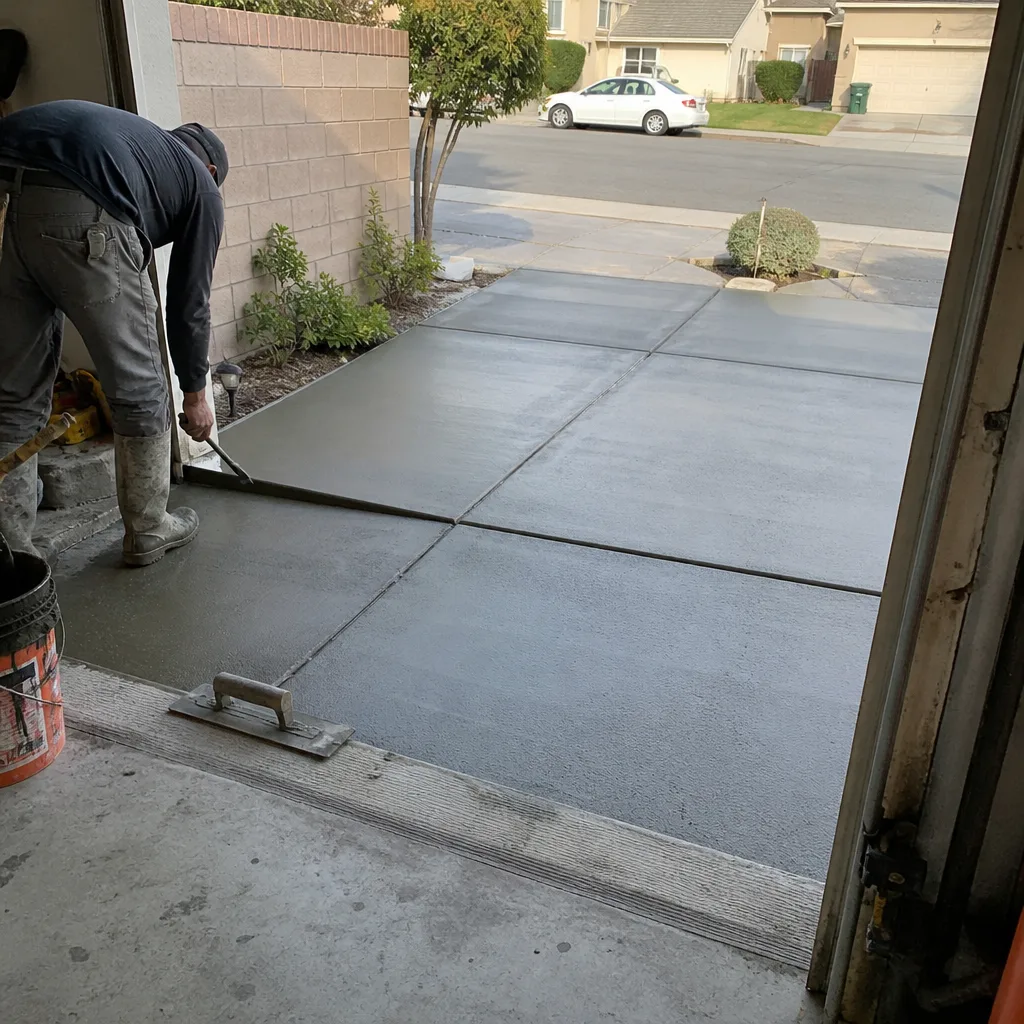
Hardscape projects face the same issue. Pavers installed over improperly compacted clay will shift within two seasons. We’ve seen driveways in north Fontana neighborhoods start to undulate within 18 months when the base was undercompacted. The fix isn’t better pavers, it’s better base preparation: deeper excavation, proper angular aggregate, and compaction in lifts. A contractor with hardscape experience in Fontana knows this. A contractor who learned hardscape in a coastal city with sandy soil might not.
Climate is the other factor. Fontana summers regularly hit triple digits, which means roofing materials need to be rated for high solar reflectance if you want your July cooling bill to stay reasonable. Certain shingle products from CertainTeed and Owens Corning carry ENERGY STAR ratings that matter in Fontana specifically. Windows are the same story: low-E coatings and proper solar heat gain coefficients aren’t optional upgrades here, they’re the difference between a comfortable bedroom and a sauna in August.
ADUs in Fontana: The Shortcut Most Homeowners Miss
Accessory dwelling units are one of the fastest-growing project types in Fontana, driven by a combination of state law liberalization and local housing demand. But most homeowners approach an ADU the same way they’d approach a custom room addition: hire an architect, wait for drawings, submit for permit, wait for plan check, fix comments, wait more, then build. There’s a faster path that’s been legal in California for years and that few Fontana homeowners know about: pre-approved and prefabricated ADU plans.
Companies like Abodu, Dvele, Plant Prefab, and Boxabl produce ADU designs that have already passed state-level review for building code compliance. That doesn’t mean the permit process disappears in Fontana, but it shrinks dramatically. A pre-approved plan set still needs site-specific review for things like setbacks, drainage, and utility connections, but the back-and-forth over structural details largely goes away. In practice, this can shave 6 to 10 weeks off the pre-construction timeline compared to custom ADU drawings.
The catch is that prefab and panelized ADUs require a general contractor who knows how to coordinate crane placement, factory delivery windows, and site prep on a Fontana lot. Many conventional remodellers have never done it. The coordination hasn’t changed: you still need someone to run the permit through the city, prep the foundation, handle the utility connections, and manage the finish work inside. What changes is that the shell arrives in sections instead of being framed stick-by-stick. For a Fontana homeowner who wants rental income sooner rather than later, that compressed timeline is worth real money.
Common Mistakes to Avoid
- Hiring based on price alone. The lowest bid in Fontana usually reflects either a thinner scope, cheaper materials, or a contractor who hasn’t fully thought through the project. When the inevitable change orders arrive, the “cheap” bid becomes the expensive one.
- Skipping the CSLB license check. It takes five minutes online and catches suspended licenses, expired bonds, and mismatched business names. Most homeowners who get burned never checked.
- Signing a lump-sum contract with no brand callouts. “Kitchen remodel: $48,000” is not a scope of work. If the contract doesn’t name the cabinet line, countertop brand, and fixture manufacturer, you’ve agreed to whatever the contractor decides to buy.
- Paying too much upfront. California caps the down payment on home improvement contracts at 10% or $1,000, whichever is less. Anyone asking for 40% “to buy materials” either hasn’t read the law or doesn’t care about it. Both are disqualifying.
- Ignoring Fontana’s permit requirements. Working without a permit creates liability when you sell the house, complicates insurance claims, and can result in a stop-work order. A contractor who suggests skipping the permit to “save money” is asking you to finance their shortcut with your equity.
- Not asking about workers’ comp. If a worker is injured on your property and the contractor doesn’t carry workers’ comp, the claim lands on your homeowners insurance. This one question protects you from a six-figure liability.
- Choosing a contractor with no Fontana project history. A contractor who has never dealt with Fontana’s specific soil, permit office, or HOA landscape will learn those lessons on your dime and your timeline.
See the difference
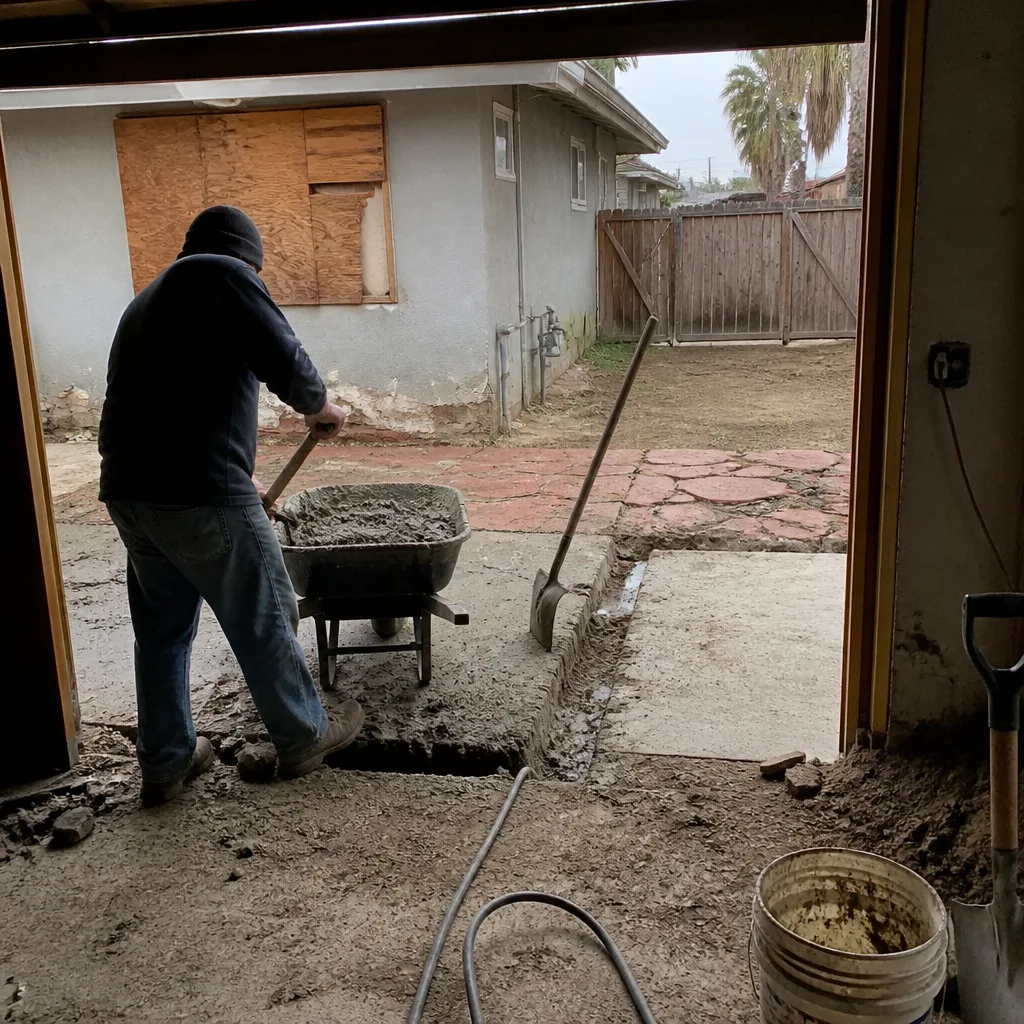 Before
 After
 Before
 After
 Before
 After
When to Call a Professional
Any project that involves structural changes, electrical work, plumbing, or roofing in Fontana should be handled by a licensed general contractor without exception. The dangerous work is not optional to delegate: roofing at height, electrical panel work, and gas line modifications carry real safety risks that demand trained professionals with current licensing and insurance. Beyond the safety issues, the practical reality is that managing a multi-trade project yourself means coordinating subs, pulling permits, scheduling inspections, and resolving the inevitable conflicts between trades. That’s a full-time job layered on top of your actual job. San Bernardino Contractors offers free estimates in Fontana, call (855) 473-5620 to discuss your project. One contractor, every phase, from the roof down to the pavers.
Frequently Asked Questions
Mid-range remodels in Fontana typically run $180 to $350 per square foot depending on scope and finish level. A kitchen remodel may cost $35,000 to $75,000, a roof replacement $9,000 to $18,000, and an ADU $150,000 to $300,000 depending on whether you choose custom construction or a prefab approach. These ranges reflect mid-range to premium material selections, which is where brand choice directly affects price. Call (855) 473-5620 for an exact quote on your specific project. Estimates are free.
Yes, Fontana requires permits for most work beyond cosmetic changes: structural modifications, re-roofs, window replacements that alter openings, electrical upgrades, plumbing changes, and all ADU construction. The only work that generally doesn’t require a permit is painting, flooring replacement, and other finish-level updates that don’t touch structure or systems.
Roofing permits typically process in 7 to 14 business days. ADU permits can take 3 to 8 weeks depending on whether you’re using pre-approved plans or custom drawings. Room additions usually land in the 4 to 10 week range assuming no zoning variances are required. A contractor with regular Fontana permit experience can give you an accurate estimate during the first consultation.
Yes, and this is where contractor quality really shows. A contractor with access to brands like Cambria, Silestone, Caesarstone, and Wellborn can walk you through the trade-offs between product lines: durability differences, lead times, warranty coverage, and price points. You pick the brand, we handle the build. The material selection conversation should happen before you sign a contract so the brands are documented in the agreement.
A remodel changes the form or function of a space: moving a wall, reconfiguring a kitchen layout, converting a garage. A renovation refreshes or replaces what’s already there: new countertops, new fixtures, new flooring within the existing layout. In Fontana, the distinction matters for permitting: remodels more frequently require structural permits and plan review, while many renovations can move forward with simpler trade permits.
It shouldn’t, as long as the scope doesn’t change. A properly scoped contract with specific brand callouts and a written change order process locks the price for the agreed work. When prices do change, it’s almost always because of unforeseen conditions (termite damage, foundation issues, outdated wiring) or because the homeowner decided to upgrade materials mid-project. Both should be documented in a signed change order before any additional work proceeds. For the full picture on what a Fontana remodel involves, see our Home Remodeling in Fontana guide.
The Bottom Line
Hiring a general contractor in Fontana is a legal question, a financial question, and a practical question all at once. The legal part is the easiest to solve: verify the CSLB license, the workers’ comp certificate, and the Fontana business license. The financial part requires a contract with specific brand callouts and milestone-based payments, so you’re never paying more than the work that’s been completed; see our Construction Cost Breakdown: The Fontana Homeowner’s Reference for 2026 for typical ranges. The practical part is the hardest: finding a contractor who knows Fontana’s permit office, understands the soil and climate conditions that affect a build, and carries real relationships with the brands you’re paying for. That combination is rarer than positive reviews suggest. Choose accordingly.
Ready to discuss your project? Call (855) 473-5620 to schedule your free estimate, or explore our San Bernardino Contractors home page to see the full scope of what one contractor can handle.
Written by the team at San Bernardino Contractors, serving Fontana since 2015.