
Last updated October 30, 2026
 Kitchen remodeling
 Bathroom remodeling
 Home additions & ADU
 Roofing
 Windows & doors
 Driveway & pavers
 Fence
Free written scope consultation - allowances, timeline, and change-order rules on paper before a single trade is scheduled
General Contractor Troubleshooting: Common Problems and How to Fix Them
The #1 reason California homeowners file complaints with the CSLB isn’t shoddy workmanship. It’s abandonment mid-project. A contractor starts the job, collects a few draws, and then goes dark, leaving a half-framed addition or a gutted kitchen behind. What most homeowners in Fontana don’t realize is that abandonment almost never happens without warning. It follows a predictable chain of smaller signals: late material deliveries, rotating sub crews, vague change orders, and requests to front-load payments. This guide walks you through how to read those signals early, what to do when problems escalate, and the exact path to resolution under California law. For how to hire a construction contractor in Fontana: a step-by-step guide, see our dedicated resource. By the end, you’ll know more about contractor troubleshooting than most project managers.
Quick Answer
Most general contractor problems fall into five categories: communication breakdowns, payment disputes, permit and inspection failures, unauthorized material substitutions, and subcontractor coordination issues. The fix in almost every case starts with a written change order or cure notice, not a phone call. Document everything, escalate in writing, and know that California’s contractor bond system gives homeowners real recourse when a San Bernardino Contractors home remodel goes sideways.
Styles & brands we work with
Table of Contents
- How to Spot Cash-Flow Trouble Before Your Contractor Goes Dark
- What to Do When Work Fails a Fontana City Inspection
- Handling Unauthorized Material Substitutions
- The Escalation Path: Cure Notice to Bond Claim
- Why Single-GC Projects Avoid the Finger-Pointing Problem
- Change Orders That Don’t Become Disputes
- Setting Up Communication Protocols That Prevent Problems
- Red Flags to Watch in the First Two Weeks
How to Spot Cash-Flow Trouble Before Your Contractor Goes Dark
Cash-flow problems are the root cause behind most contractor abandonments in California. A contractor who can’t pay suppliers stops getting materials delivered. A contractor who can’t pay subs watches his crews drift to other jobs. The signs show up weeks before the contractor actually disappears. In Fontana, where the General Contractor in Fontana market includes plenty of small operators running multiple jobs at once, these signals are worth watching from day one.
Here’s what cash-flow trouble looks like on a job site:
- Material deliveries slow down or stop. Framing lumber sits unordered. Windows that were supposed to arrive Tuesday show up the following Monday, or not at all. Suppliers put contractors on credit hold when invoices go unpaid.
- Sub crews rotate constantly. You see a different framing crew week to week, or the tile setter who started your bathroom gets replaced mid-job. Subs walk when checks bounce or show up late.
- Requests to front-load payments. A contractor asking for 50% down before demo starts, or wanting the next draw before the work tied to it is complete, is managing his cash flow with your money. This is the single biggest early warning sign.
- The contractor asks you to pay suppliers directly. This means his credit is tapped out. Once you start paying his suppliers, you’re effectively financing his business, and you’re not protected by the contract’s payment schedule.
- Work quality drops as pressure rises. Crews rushing to finish and move to the next paying job leave sloppy trim, skipped waterproofing, or rushed inspections.
What to do: If you see two or more of these signs in the same week, act before the contractor disappears. Send a written request for a project status update, including a schedule of remaining work and a list of all materials ordered and outstanding. Put a hold on the next payment draw until the work tied to that draw is verifiably complete. If the contractor pushes back hard on a reasonable accounting request, that pushback is itself diagnostic.
What to Do When Work Fails a Fontana City Inspection
Failed inspections are common, and they’re not automatically a sign of a bad contractor. Framing inspectors in Fontana enforce the California Building Code strictly, and a missed hold-down or an undersized header will get flagged. What matters is who pays for the rework and the re-inspection fee, and how quickly it gets corrected.
Here’s the framework that applies under California law and standard industry contracts:
- Determine who caused the failure. If the contractor’s work didn’t meet code, the contractor owns the correction cost and any re-inspection fees. If the failure stems from a design error in the plans you approved, you may own it. If it’s ambiguous, get it in writing before work resumes.
- Request a written correction plan. Ask the contractor to document exactly what failed, what the fix is, and when the re-inspection will happen. Verbal promises don’t hold up if the project later goes to the CSLB or arbitration.
- Verify the re-inspection actually gets scheduled. Some contractors quietly fix the issue and move on without a re-inspection, which leaves a failed inspection on the building record and can complicate your final occupancy sign-off.
- If the contractor disputes responsibility, get the building official’s written correction notice. That document names the specific code sections violated. It’s the evidence you need whether you’re negotiating with the contractor or filing a later claim.
Fontana’s building department has tightened inspection timelines in recent years, and re-inspection slots can take a week or more to schedule. A single failed rough framing inspection can push a project back two weeks. Good contractors build inspection lead time into their schedules for exactly this reason.
Handling Unauthorized Material Substitutions
Your contract specifies GAF Timberline shingles. The roofer shows up with a generic brand. Your window schedule calls for Therma-Tru entry doors, and a no-name fiberglass door gets installed instead. Unauthorized substitutions happen for one of two reasons: supply-chain delays or margin padding. Either way, you have options.
What California law gives you:
- Written contract protection. California Business and Professions Code requires home improvement contracts to specify the brand, model, and sometimes even the color of major materials. If the contract names the product and the contractor substitutes without written approval, that’s a contract breach.
- The right to refuse delivery. If you see the wrong material on site before it’s installed, say no. Once it’s installed, the fix gets harder and the contractor may argue you accepted it by not objecting promptly.
- Recourse after installation. If the swap is already done, send a written demand for correction, citing the contract language that specifies the product. If the contractor won’t correct it, you can deduct the cost difference from the next payment, but do this carefully: unilateral withholding can trigger a lien claim. Document the discrepancy in writing first.
- CSLB complaint as a backstop. Material substitution without approval is one of the more straightforward claims homeowners win at the CSLB, because the contract language is usually clear.
One thing to check before you sign any Home Remodeling in Fontana contract: does the wording say “or equivalent” anywhere? “GAF Timberline or equivalent” gives the contractor room to substitute. “GAF Timberline HDZ, color Charcoal” doesn’t. Be specific in the contract, and substitutions become harder to slip past you.
The Escalation Path: Cure Notice to Bond Claim
When a contractor stops showing up, or refuses to fix defective work, California gives homeowners a structured escalation path. It works best when you follow it in order, because each step builds evidence for the next one.
- Written cure notice (1-2 weeks). Send a dated, signed letter or email identifying the specific problem, referencing the contract section that applies, and giving the contractor a reasonable deadline to fix it. California courts generally interpret “reasonable” as 10-15 days for straightforward corrections. This letter is the foundation of every later claim.
- CSLB complaint (2-6 months). File with the Contractors State License Board. The CSLB will contact the contractor, often by phone or letter, and many disputes resolve at this stage because the contractor doesn’t want a complaint on his license record. The CSLB also has an arbitration program for disputes up to $50,000.
- Contractor bond claim (1-3 months to resolve). Every licensed California contractor carries a $25,000 license bond (newer licenses may carry more). If the contractor abandons the job or performs defective work, you can file a claim against that bond. The bond company pays valid claims up to the bond limit, then collects from the contractor. Note: the bond is not a warranty fund, and the surety will investigate.
- Small claims or arbitration (3-12 months). Disputes up to $12,500 in California small claims court are fast and inexpensive. Larger disputes go to arbitration if your contract has an arbitration clause, or to superior court if not. Most home improvement contracts now include mandatory arbitration clauses, so read yours before the project starts.
The realistic timeline from first cure notice to a resolved bond claim is 4-6 months. Homeowners who skip straight to filing a lawsuit often spend more on legal fees than they recover, which is why the cheap, early steps matter.
Why Single-GC Projects Avoid the Finger-Pointing Problem
Here’s a scenario we’ve seen in Fontana more times than we can count: a homeowner hires a separate plumber, framer, and tile contractor for a bathroom remodel. The shower pan leaks. The plumber blames the framer for an out-of-level subfloor. The framer blames the tile setter for cracking the pan during install. The tile setter blames the plumber for a bad rough-in. The homeowner pays three different forensic opinions and still doesn’t know who owns the fix.
This is the hidden cost of managing multiple specialists. When one general contractor manages the entire Home Renovation in Fontana project, from demolition to final paint, there’s no one else to blame. The GC owns every trade on the job, which means:
- One contract, one accountable party. If a shower pan leaks, the GC fixes it. No debate about which sub caused it.
- Trade sequencing is managed intentionally. The framing gets built for the plumbing rough-in, which gets placed for the tile layout. Trades stop blaming each other when one person plans the sequence.
- Material compatibility is checked once, at the top. A GC specifying the waterproofing, drain assembly, and tile adhesive together catches incompatibilities before they become failures.
- Change orders flow through one channel. When the homeowner wants to change a fixture location, the GC tells the plumber, the electrician, and the drywall crew. In a multi-contractor setup, the homeowner is the project manager and the messenger, and something always gets lost.
This is the core argument for hiring a single general contractor for whole-home work. The premium you pay for a GC’s markup is really buying coordination, and coordination is what prevents most construction disputes.
Change Orders That Don’t Become Disputes
Change orders are where contractor relationships either survive or die. The classic failure pattern: the homeowner asks for something verbally, the contractor says “no problem,” the work gets done, and then a $4,000 change order appears at the end of the project. The homeowner never approved that number. The contractor insists it was discussed. Now there’s a fight.
The fix is a process that removes ambiguity. Here’s the change-order protocol that works:
- Nothing changes without a written change order signed before the work starts. Not a text message. Not a verbal “go ahead.” A written document that names the change, states the price, and adjusts the schedule.
- The change order should specify materials by brand and model. If you’re upgrading from builder-grade windows to ES Windows or ECO Window Systems aluminum frame windows, the change order should say exactly that. Generic “upgraded windows” language is how you end up with the wrong product.
- Zero-dollar change orders count too. If a wall moves and the price doesn’t change, write it down anyway. The schedule impact matters even when the cost doesn’t.
- Send changes by email even after a signed paper. A paper change order signed on the job site, followed by a confirmation email that says “attaching the signed change order for the powder room tile upgrade to Mr-Glass mosaic,” creates a trail that holds up at the CSLB.
Most contractors aren’t trying to gouge homeowners with change orders. The honest ones want the process documented as much as you do, because it protects their lien rights and their final payment.
Setting Up Communication Protocols That Prevent Problems
Contractor disputes rarely start with a single big fight. They accumulate from a thousand small misunderstandings: the homeowner thought the kitchen tile included the backsplash, the contractor thought the allowance covered the faucets, the homeowner expected progress photos every week, the contractor expected to only communicate at scheduled walkthroughs.
Here’s the communication setup that prevents most of those misunderstandings, and it takes about an hour to establish before demo starts:
- Weekly written progress report. Email or text, every Friday, covering: work completed this week, work scheduled next week, materials ordered and expected delivery dates, and any open questions that need homeowner decisions.
- Scheduled walkthroughs. One on-site meeting every two weeks, not ad-hoc “can you come look at this” requests. The walkthrough has an agenda. Notes get written up after and sent to both parties.
- Single point of contact for questions. The homeowner talks to the project manager or the GC directly, not to the framing crew lead or the tile setter. Trades get instructions from one person.
- Decision deadlines in the contract. The contract should specify how long the homeowner has to make selections: “countertop selection due by end of week 4” and so on. Homeowner delays are a real cause of project delays, and naming the deadlines in the contract removes the ambiguity.
- Payment tied to documented milestones. Each draw happens only after specific work is complete and verified at a walkthrough. No draw requests based on “we’re about 80% done.”
Contractors who resist written communication protocols are usually the ones who benefit from the ambiguity. The best contractors in Fontana already run their projects this way without being asked.
Red Flags to Watch in the First Two Weeks
The first two weeks of a project reveal more about a contractor than the next two months. This is when you’ll see whether the operation is organized or improvisational, funded or stretched, staffed or scrambling. Here’s what to watch:
- Permit display. A licensed contractor should have the permit posted on site within the first few days of work starting. If the contractor says “we’ll pull it later” or “we don’t need a permit for this,” that’s your first serious warning.
- Daily presence. Is the contractor or a named project manager on site every day, or at least every day work is happening? Jobs that get supervised inconsistently produce inconsistent work.
- Clean site. A chaotic demo site is normal. A site that stays chaotic into week two, with debris piling up and no dumpster or haul-away plan, signals a contractor who doesn’t run a tight operation.
- Material deliveries matching the schedule. If week one is framing and the concrete for footings shows up in week three, the schedule is already fiction.
- Subs who know the plan. If the electrician arrives and asks you where the panel is going, the contractor isn’t communicating with his own team.
- Invoices that match the contract. The first draw request should match the contract’s payment schedule exactly. If it doesn’t, ask why in writing before paying.
None of these signs alone means your project is doomed. Two or three together in the first two weeks, and you should have a direct conversation with the contractor about your concerns. If the response is defensive rather than corrective, that’s information too.
Common Mistakes to Avoid
- Paying too much upfront. California law caps down payments for home improvement projects at 10% or $1,000, whichever is less. Paying more than that is illegal for the contractor to accept and puts you in a weak position for the rest of the job.
- Ignoring the CSLB license check. Verify the license number on the CSLB website before signing. Look for the license status, any complaints, and whether the license covers the work being done. Fontana has a real problem with unlicensed operators taking deposits and walking.
- Accepting verbal change orders. If it’s not written and signed, it didn’t happen. This is the single most common cause of change-order disputes in California residential construction.
- Skipping the lien release paperwork. Every time you pay a draw, get a conditional lien release from the GC and the major subs. Without it, you can pay the contractor in full and still face a mechanics lien from a sub who never got paid.
- Hiring the low bid without checking scope. A bid that’s 30% below the others almost always means the contractor is leaving something out, planning to make it up in change orders, or using substandard materials. Compare bids line by line, not just bottom line.
- Not documenting the existing condition. Take photos and video of every surface before work starts. When a dispute arises about whether the contractor cracked the driveway or it was already cracked, your photos answer the question.
- Paying the final draw before the punch list is done. Hold 5-10% of the contract price until every punch list item is complete and the final inspection passes. Once final payment clears, your leverage disappears.
See the difference
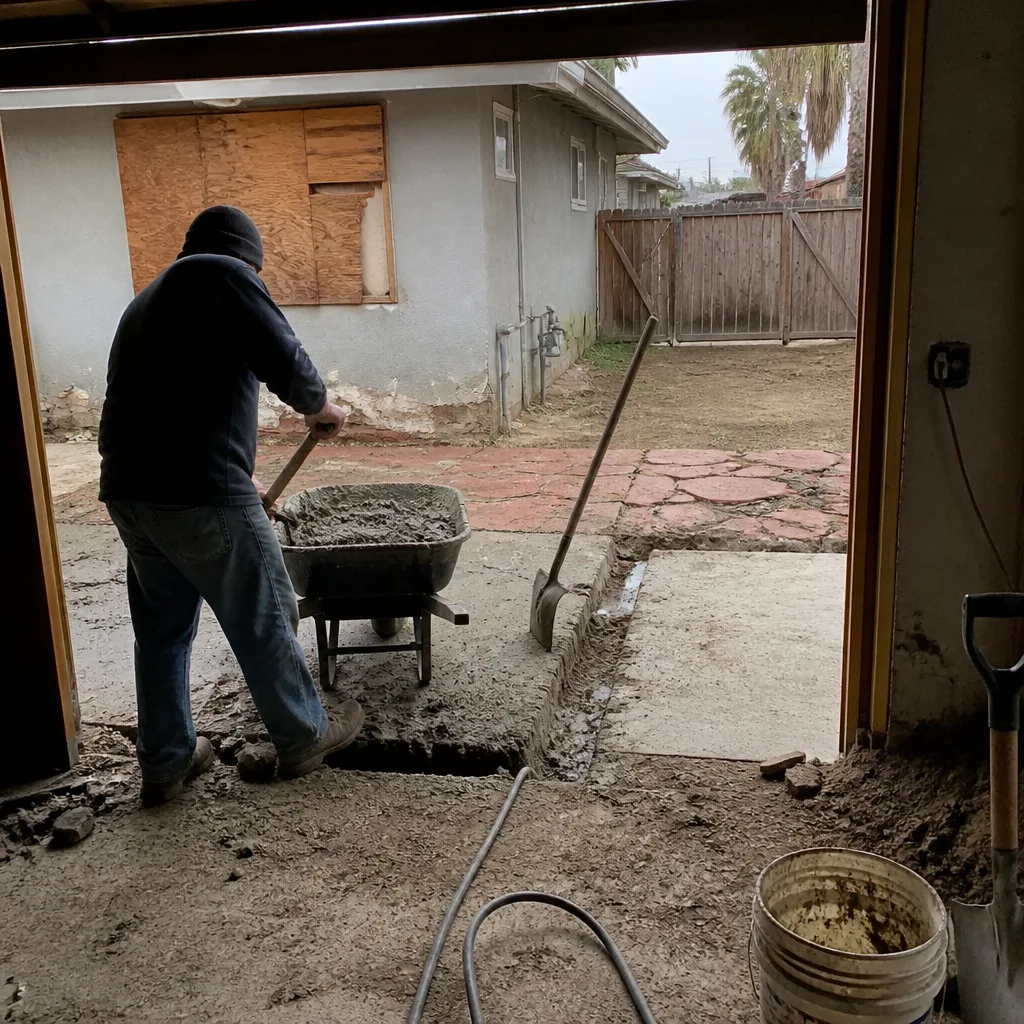 Before
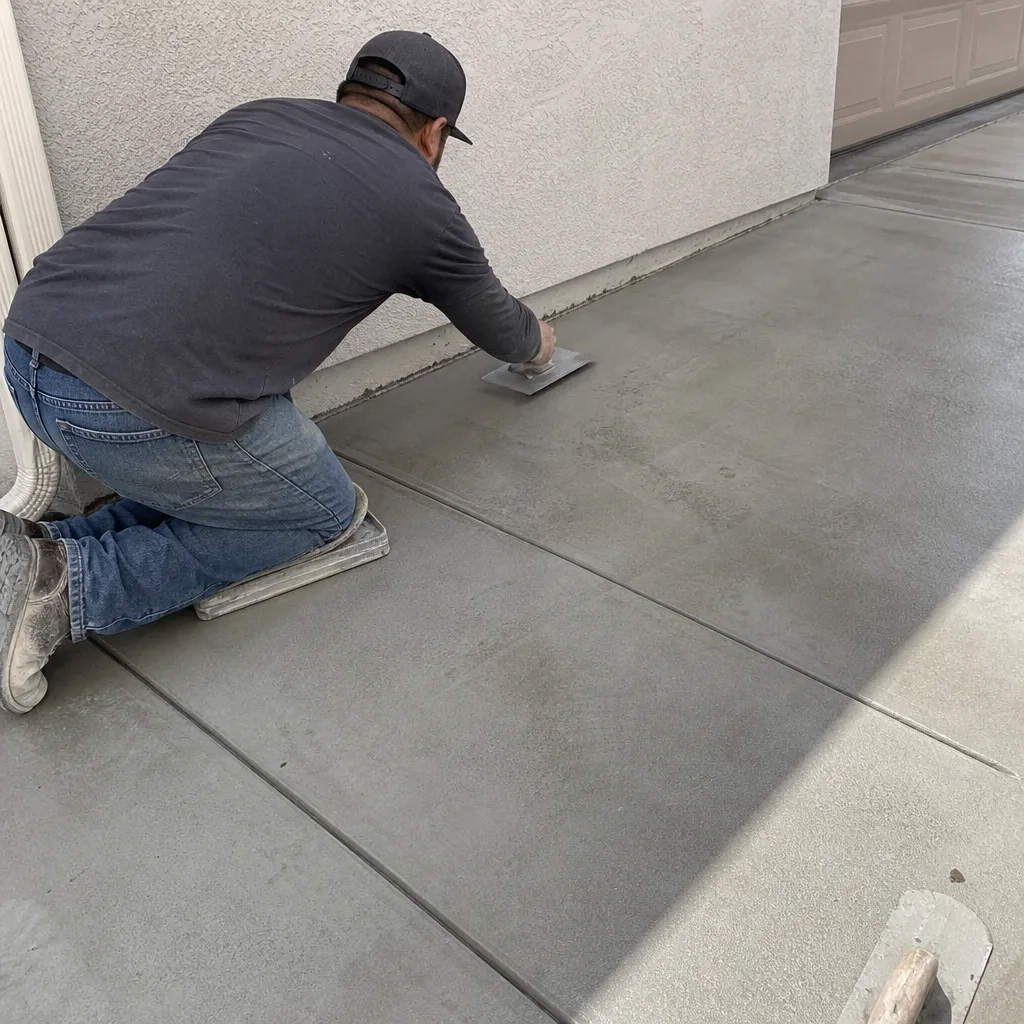 After
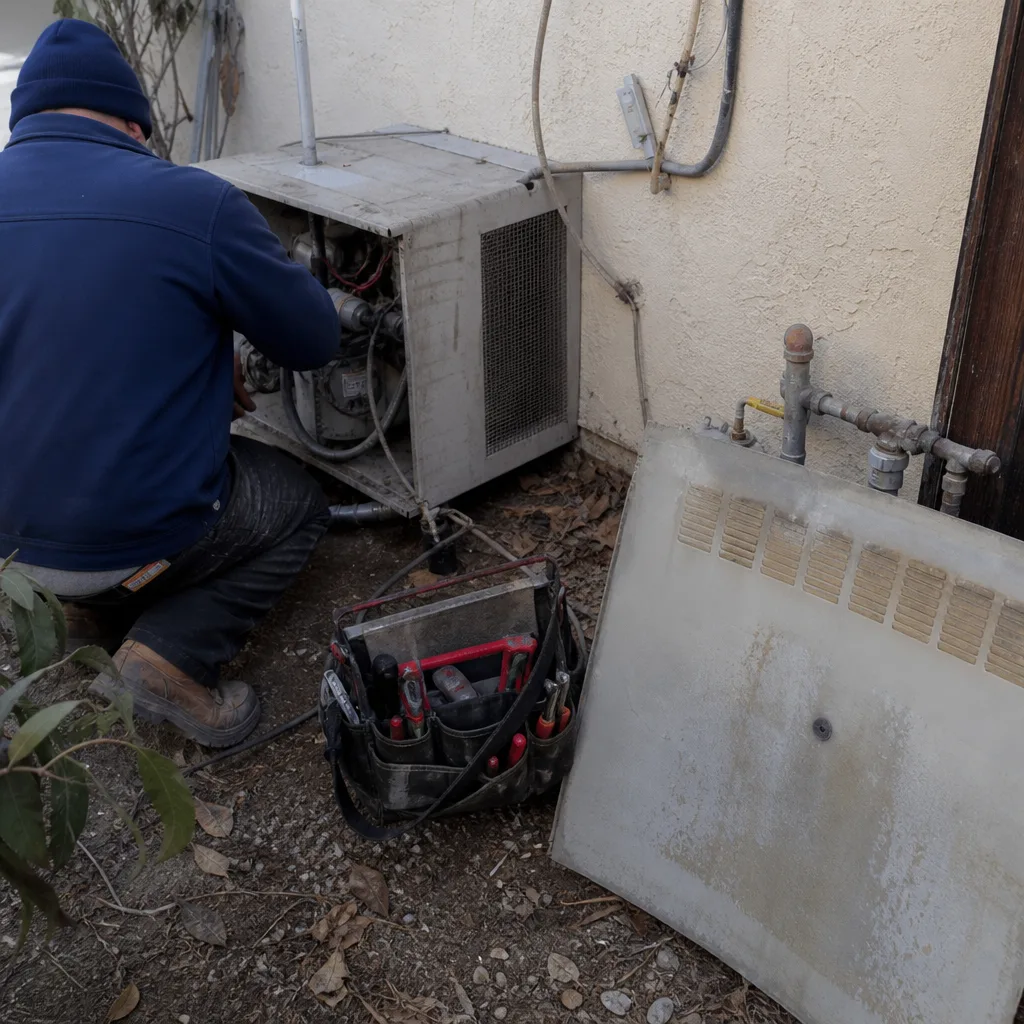 Before
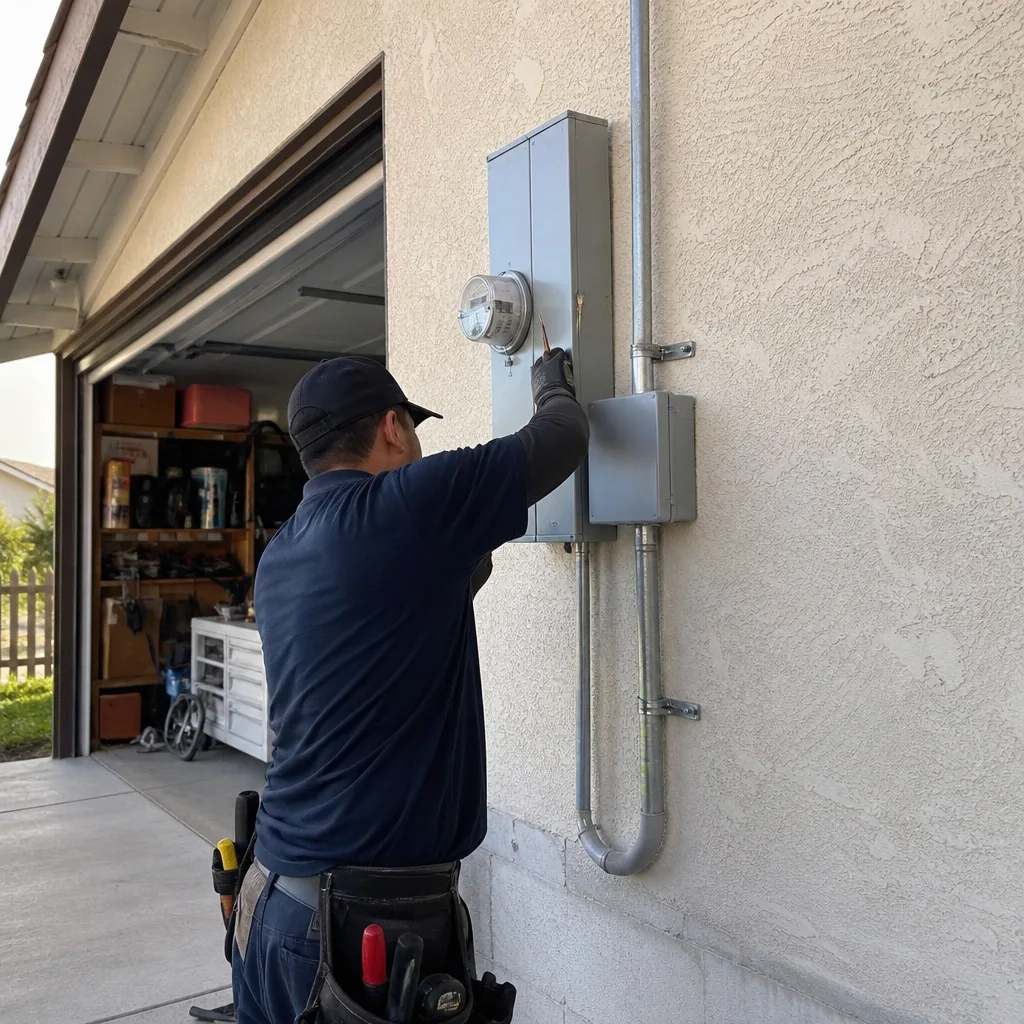 After
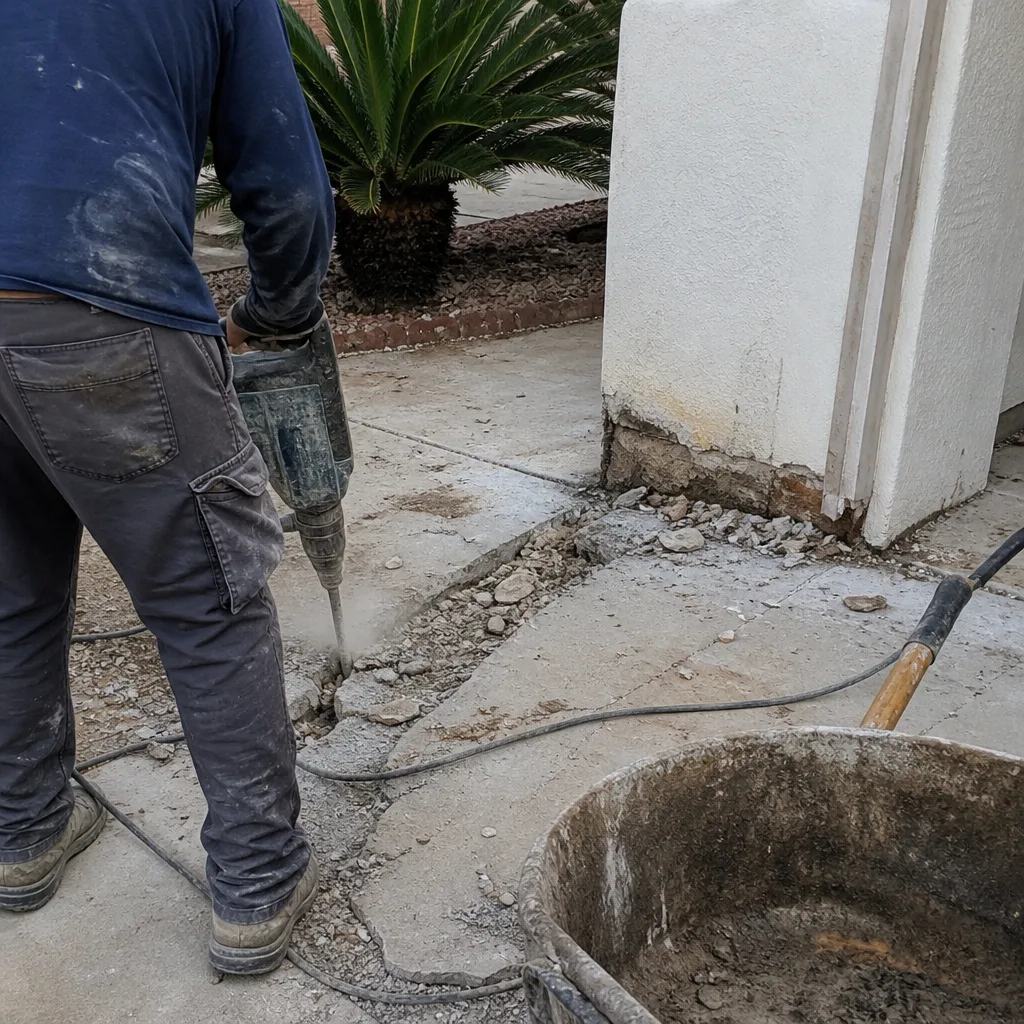 Before
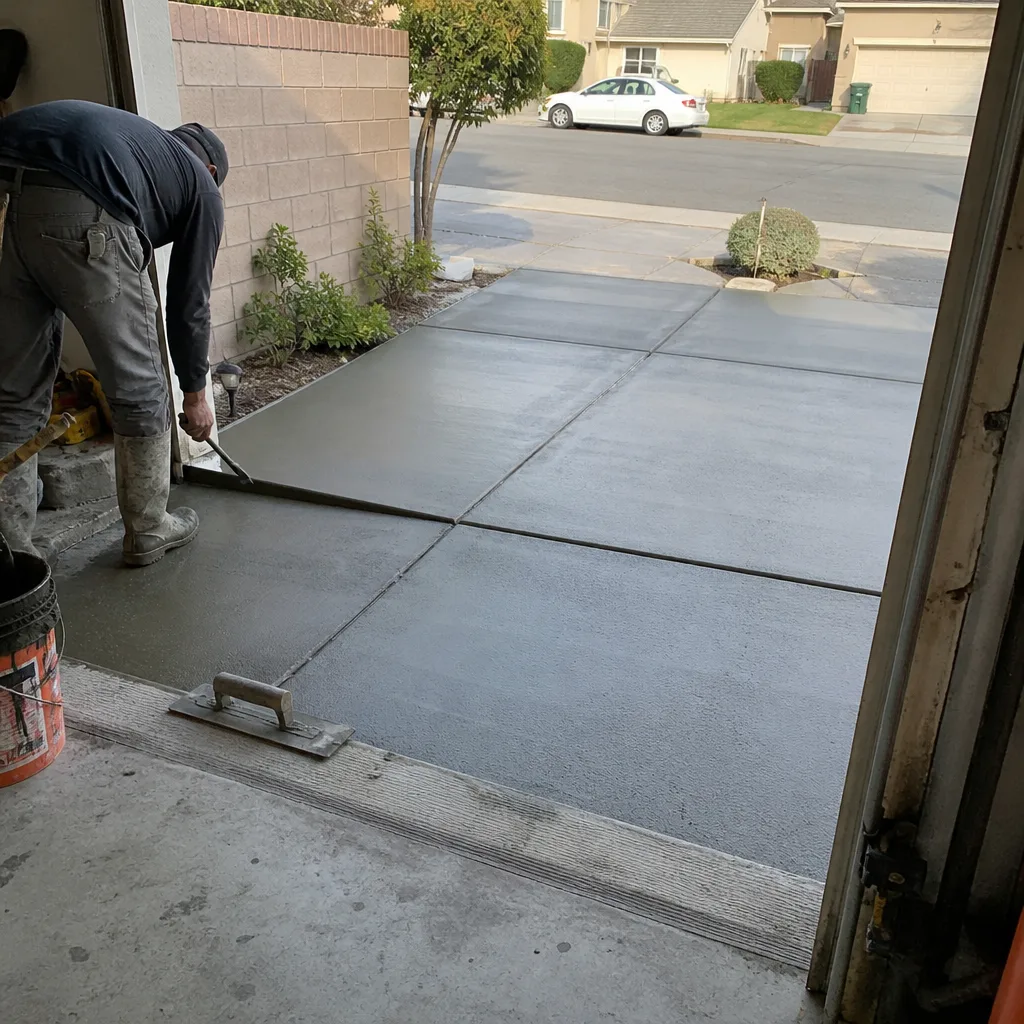 After
When to Call a Professional
Some troubleshooting you can do yourself: reading your contract, watching for red flags, sending written requests for documentation. But there are moments when you need a professional to step in. When a structural issue shows up mid-project. When a failed inspection reveals code violations in work that’s already covered up. When the relationship with your contractor has broken down to the point that every conversation turns hostile. When a project has been abandoned and you need the work completed correctly by someone who can document the existing conditions and fix what’s wrong. San Bernardino Contractors offers free estimates in Fontana. If you’re looking at a half-finished remodel and a contractor who stopped answering calls, call (855) 473-5620. We’ll walk the site, assess the situation, and give you a straight answer about what it’ll take to finish the job right. For more guides & resources, visit our blog.
Frequently Asked Questions
Re-inspection fees in Fontana typically run $150-$300 depending on the trade, but the real cost is the rework behind the failure, which can range from a few hundred dollars for a missing strap to tens of thousands for structural corrections. The contractor who caused the failure should cover both the rework and the re-inspection fee. Get a written correction plan before any money changes hands, and call (855) 473-5620 if you need a second opinion.
Yes. California allows homeowners to terminate a home improvement contract at any time, but you’ll owe the contractor for work completed up to the termination date and documented material costs. The cleanest way to do this is with a written termination notice that states the effective date and requests a final accounting and lien releases. Document the site condition with photos before the contractor removes tools and materials.
An unauthorized substitution is a contract breach under California law. Send a written demand for correction that cites the exact contract language specifying the product. If the contractor won’t correct it, you can recover the cost difference, either through negotiation, a CSLB complaint, or a claim against the contractor’s bond. The key is having the original contract language be specific enough that the substitution is unambiguous.
Most CSLB complaints resolve in 2-6 months, depending on the complexity and whether the contractor responds. The CSLB’s arbitration program, available for disputes up to $50,000, typically moves faster than the formal complaint process. Neither path requires a lawyer, though consulting one before filing is smart if the dollar amount is significant.
Send a written cure notice immediately, giving the contractor a specific deadline to return and complete the work. Document the abandonment with photos and a written timeline. If the deadline passes without response, file a CSLB complaint and a claim against the contractor’s $25,000 license bond. The bond claim is often the fastest way to recover money from an abandoned project.
Hire one licensed general contractor to manage the entire project, verify the license on the CSLB website, cap the down payment at 10%, require written change orders for every change, and tie every payment draw to completed work verified at a walkthrough. Contractors who push back on any of these terms are telling you something about how the project will go. For a Home Remodeling in Fontana project managed under these protocols from day one, call (855) 473-5620 for a free estimate.
The Bottom Line
Most general contractor problems are solvable if you catch them early and act in writing. Watch for the cash-flow warning signs in the first weeks. Document every change, every payment, and every conversation that matters. Follow the escalation path in order: cure notice, CSLB complaint, bond claim, and only then legal action. Hire a single general contractor who owns the whole project, and you eliminate most of the coordination failures that turn remodels into disputes. For seasonal construction care for Fontana: year-round homeowner’s tips, check our seasonal maintenance guide. Fontana homeowners who know these warning signs before they sign a contract are the ones who end up with finished projects instead of lawsuits.
Written by the team at San Bernardino Contractors, serving Fontana since 2015.