
Last updated October 30, 2026
 Home additions & ADU
 Kitchen remodeling
 Bathroom remodeling
 Roofing
 Windows & doors
 Driveway & pavers
 Fence
Free written scope consultation - allowances, timeline, and change-order rules on paper before a single trade is scheduled
General Contractor Maintenance Checklist for Fontana Homeowners
The average Fontana homeowner spends $3,200 more per decade on reactive repairs than preventive maintenance. It’s not because they’re negligent. It’s because the checklists they pull from the internet were written for a climate with four gentle seasons, not a place where Santa Ana winds hit 70 mph, summer UV indexes hover near 11, and the clay soil under the slab expands and contracts like a breathing animal. This guide is different. It’s organized the way a general contractor actually thinks: by trade, by stress point, and by the specific ways Fontana’s climate tries to tear your house apart year after year.
Quick Answer
A complete home maintenance checklist for Fontana should be organized around six trade categories that take the most damage here: roofing and flashing verification before Santa Ana season, hard water and grout inspection on all bathroom fixtures, clay soil foundation and drainage checks, biannual HVAC and attic insulation performance tests, window and door seal integrity, and exterior material care for stucco, siding, fencing, and pavers. Most of these tasks cost under $200 per year when caught early and over $2,000 when ignored. We’ve assembled the checklist below so you can work through it seasonally, with clear guidance on what’s safe to handle yourself and what requires a licensed contractor. For how to hire a construction contractor in Fontana: a step-by-step guide, see our dedicated resource.
Styles & brands we work with
Table of Contents
- Why Fontana’s Climate Demands a Different Maintenance Calendar
- Roof, Flashing, and Santa Ana Wind Prep
- Hard Water: The Silent Grout and Fixture Killer
- Clay Soil Movement: Foundation, Doors, and Drainage
- HVAC, Attic Insulation, and Radiant Barrier Checks
- Windows, Doors, and Seal Integrity
- Exterior Materials: Siding, Fencing, and Pavers
- Common Mistakes to Avoid
- When to Call a Professional
- Frequently Asked Questions
Why Fontana’s Climate Demands a Different Maintenance Calendar
Fontana sits in a unique microclimate even by Inland Empire standards. We get the full blast of San Bernardino County heat without the coastal marine layer that cools Ontario or Rancho Cucamonga on summer evenings. January nights can dip into the high 30s while August afternoons routinely crack 105 degrees. That’s a 60-plus degree swing every year, and it works on your home the way a crowbar works on a shipping crate: slowly, then all at once.
A general contractor’s maintenance checklist looks different from a home inspector’s because we organize around trades, not rooms. An inspector walks through and notes what’s wrong. A contractor walks through and asks what’s about to go wrong, what it’ll cost to fix now versus later, and which brand of replacement material will hold up longest in this specific climate. In our experience working on general contracting projects across Fontana, we see the same failure patterns repeat in the same neighborhoods year after year: cracked stucco on south-facing walls, grout crumbling in bathrooms with untreated hard water, and gate hinges pulling loose as clay soil shifts.
Here’s the thing most checklists miss: maintenance timing matters as much as maintenance tasks. Checking your roof in November, after Santa Ana season has already started, is like checking your brakes at the bottom of the hill. Fontana’s stress calendar runs on two peaks: wind season (October through January) and heat season (June through September). Your maintenance schedule should be built around those.
Key Takeaways: Fontana’s Seasonal Stress Calendar
- October-November: Roof, flashing, gutter, and fence inspection before Santa Ana winds arrive
- April-May: HVAC, attic insulation, and radiant barrier checks before summer heat loads peak
- Year-round: Hard water treatment on fixtures and grout, drainage grade verification after heavy rain
- After any 70+ mph wind event: Walk the roof line and check for lifted shingles, even if nothing looks wrong from the ground
Roof, Flashing, and Santa Ana Wind Prep
Fontana’s roof damage doesn’t come from rain. It comes from UV radiation and wind. Our summer sun delivers an average UV index of 10 to 11, which bakes asphalt shingles until the granules loosen and the asphalt underneath turns brittle. Then the Santa Anas arrive and peel those compromised shingles off like stamps from an envelope. We see it every October: homeowners who skipped their pre-wind inspection calling us after the first big blow with shingles in their pool and water stains spreading across their ceiling.
Here’s what a complete roof maintenance check should cover in Fontana, and when to do it:
- Late September / early October: Walk the roof (or have a contractor do it) and check for lifted shingle tabs, cracked flashing around vents and chimneys, and granule loss in valleys. Look specifically at the south and west slopes, which take the most UV damage.
- Check flashing at every roof penetration: Plumbing vents, furnace flues, skylights, and the chimney. Flashing sealant breaks down in Fontana’s heat about 30% faster than the manufacturer’s stated lifespan. If you have a roof from GAF, CertainTeed, or Owens Corning, their warranties specifically require documented inspection and maintenance to remain valid.
- Clear gutters and downspouts: Santa Ana winds fill gutters with dry leaves, palm fronds, and windblown debris in a single afternoon. Blocked gutters during a wind event turn into water channels that back up under your fascia and into your attic.
- Check for lifted ridge caps: The ridge is your roof’s first line of defense against wind uplift. A loose ridge cap lets wind get under the shingles and peel them in sheets.
- Inspect attic ventilation: In Fontana’s 100-degree summers, an attic that doesn’t ventilate properly hits 150 to 160 degrees. That heat radiates down into your living space and also cooks your shingles from underneath, cutting their lifespan by a third.
Speaking of brands: we work with roofing systems from six of the industry’s most trusted manufacturers, including GAF, CertainTeed, and Owens Corning. Each has specific installation and maintenance requirements, and if you skip the documented maintenance, you’re giving the manufacturer a reason to deny your warranty claim when a storm eventually does damage. A homeowner who buys a roof based on a 50-year warranty but never documents an inspection doesn’t have a 50-year roof. They have a roof with a piece of paper that says “maybe.”
One more thing most Fontana checklists miss: check your tile roofs for cracked or shifted tiles after ANY wind event over 40 mph, not just the big Santa Anas. A shifted tile exposes the underlayment, and once the underlayment goes, you’re looking at a full re-roof, not a repair. The good news is that single shifted tiles are usually a $150 fix if caught within a week. Wait six months and it’s a four-figure problem.
Hard Water: The Silent Grout and Fixture Killer
If you live in Fontana and you don’t have a water softener, your water is hard. Not “slightly hard” or “moderately hard” – we’re talking 10 to 15 grains per gallon depending on your exact water source, which puts us firmly in the “very hard” category by every standard measure. What that means in practical terms: every gallon of water that touches your shower head, faucet aerator, toilet fill valve, and tile grout is depositing a microscopic layer of calcium and magnesium. Day after day. Year after year.
A general contractor’s troubleshooting approach to hard water runs deeper than a home inspector’s. An inspector notes mineral staining on a shower head and calls it cosmetic. A contractor pulls the aerator, scrapes the buildup, and tells you what’s actually happening inside your pipes and behind your tile.
- Monthly: remove and soak faucet aerators in vinegar. This is a five-minute job with channel locks and a bowl. If your aerator is crusted over to the point where you can’t see the mesh, your water pressure is dropping by 20 to 30% at that fixture, and the water that does get through is being forced into micro-jets that splatter and stain your sink basin.
- Quarterly: check grout lines in showers and around tub surrounds. Hard water attacks grout two ways. First, it deposits minerals that bond to the grout surface and create pinhole textures where mold can anchor. Second, if water sits in the grout joint, the dissolved minerals actually degrade the grout’s cement binder over time. This is why Fontana bathrooms need grout replacement or sealing years earlier than coastal homes with softer water.
- Semi-annually: flush your water heater. In Fontana, sediment builds up roughly twice as fast as the national average because of our mineral load. An un-flushed water heater loses efficiency, makes popping sounds as sediment superheats, and has a lifespan 30 to 40% shorter than a maintained unit. If your tank is more than three years old and has never been flushed, have a plumber do the first one. The drain valves are often seized with mineral deposits and can break.
- Annually: inspect shower valve cartridges. Hard water causes mineral scale to build on the ceramic discs inside modern pressure-balancing valves. Early symptom: the handle gets stiff, then sticky, then starts dripping. A cartridge replacement from Kohler, Moen, or Delta is usually under $60 in parts. Let it go and you’re replacing the whole valve body, which means opening the wall.
- Annually: check toilet fill valves and flappers. The flapper is the most common toilet leak in Fontana, and mineral buildup on the seal is why. A leaking flapper can waste 200 gallons a day, and you’ll see it on your water bill months before you hear it.
We’ve replaced bathroom tile in Fontana homes where the grout was so mineral-compromised it crumbled out of the joints in chunks. The homeowners thought they had a leak. What they had was eight years of untreated hard water doing exactly what hard water does. The fix for most Fontana homes comes down to two things: a whole-house water softener if your budget allows, or a regular sealing schedule for grout and a maintenance routine for your fixtures if it doesn’t. Either way, the minerals don’t take a day off.
Clay Soil Movement: Foundation, Doors, and Drainage
Fontana sits on clay-heavy soil, and clay is the most movement-prone soil you can build on. It expands when wet, contracts when dry, and in a climate where we swing between winter rains and 105-degree droughts, that expansion and contraction cycle never stops. Your slab is sitting on ground that’s essentially breathing all year. That’s not a foundation defect – it’s Fontana geology, and every house here deals with it to some degree.
The maintenance task isn’t stopping the movement. You can’t. It’s managing the symptoms so they stay cosmetic instead of structural.
- Monthly: check interior doors for dragging or gaps. A door that starts sticking at the top corner is telling you the frame has shifted. Walk your house once a month and open and close every door. Take notes. A door that sticks for a week and then frees up is normal seasonal movement. A door that sticks, stays stuck, and gets worse is a sign that a specific section of slab is moving more than the rest.
- Quarterly: walk the exterior perimeter and look at the foundation stem wall. Hairline cracks under 1/8 inch are normal and cosmetic. Cracks that are wider at the top than the bottom, cracks that show displacement (one side sticks out past the other), or stair-step cracks in brick or block should be evaluated by a professional.
- After any significant rain: verify drainage grade. The soil around your foundation should slope away from the house at a rate of at least 6 inches over the first 10 feet. In Fontana, a lot of homes were graded properly when they were built, but years of landscaping, settling, and homeowner projects have flattened the grade. When water pools against the stem wall, the clay directly under that section of foundation expands disproportionately, and that’s what causes differential settlement.
- Annually: check window frames for racking. If windows that used to glide now bind, or if you see drywall cracking at the upper corners of window openings, that’s the slab moving and transferring stress up through the wall framing. One or two hairline cracks is normal. Cracks that run diagonally from a window corner and keep growing are worth a professional look.
- Maintain consistent moisture. Fontana’s biggest clay-related damage comes from extremes: soil that’s saturated for three months, then baked bone-dry for six. If you have landscaping near the foundation, use drip irrigation on a timer rather than hand-watering sporadically. The goal is consistent, moderate moisture within 3 feet of the stem wall.
Here’s the number that matters: fixing a foundation issue caught early – say, a drainage problem that’s causing localized settling – usually runs $1,500 to $5,000 for regrading, French drains, or low-impact pier work. Catching the same issue five years later, after the slab has cracked and the framing has racked, runs $20,000 to $50,000. The monthly door check costs nothing. The stakes are real.
HVAC, Attic Insulation, and Radiant Barrier Checks
Your HVAC system in Fontana is not a heating system with air conditioning attached. It’s a cooling system that happens to also heat. The equipment works hardest in July and August, when outdoor temps hit 105 and your attic is pushing 150 degrees. The maintenance schedule should be built around that reality.
Here’s the pre-summer checklist we recommend for Fontana homeowners, timed for April or early May, before the real heat arrives:
- Replace or clean the air filter. If you have a 1-inch disposable filter, it needs replacing every 30 to 45 days during cooling season. In Fontana’s dry, dusty air, a filter that lasts 90 days in a coastal home is completely clogged at 45. A clogged filter cuts airflow by up to 40%, which forces the system to run longer, which drives your July bill up and your compressor lifespan down.
- Check the condensate drain line. In Fontana’s dry heat, your AC pulls gallons of water out of the air every day. The condensate line drains that water either outside or into a plumbing fixture. Algae and mineral scale build up in the line, and when it plugs, water backs up into the drain pan and eventually your ceiling. Pour a cup of white vinegar down the line every 30 days during cooling season as a preventive.
- Inspect visible ductwork in the attic. Look for separated joints, crushed sections, and insulation that’s falling off. In a 150-degree attic, a duct that’s leaking 20% of its conditioned air into the attic space is costing you real money every month. Flex ducts in Fontana have a lifespan of about 10 to 15 years because the heat degrades the plastic outer jacket and the foil inner liner.
- Check attic insulation depth and condition. Most Fontana homes built before 2000 have R-19 or R-30 fiberglass batts that have settled to half their rated depth. Current code calls for R-38 minimum in our climate zone, and homes built before the early 1980s often have R-11 or less. Upgrading attic insulation is one of the best ROI projects in Fontana. The payback on an insulation upgrade, purely in cooling cost savings, is typically 3 to 5 years.
- Evaluate radiant barrier performance. A radiant barrier is a reflective material installed under the roof deck that reflects radiant heat back out of the attic. It can lower attic temperatures by 20 to 30 degrees. If you have one, check that it’s still attached and hasn’t gathered dust that reduces its reflectivity. If you don’t have one, it’s worth considering. We’ve seen radiant barriers cut summer attic temps enough that ceiling surfaces stay noticeably cooler to the touch.
One point that most checklists miss: if your AC system is more than 12 years old, do the pre-summer inspection in March, not May. Older systems fail when they’re asked to work hardest, which is July and August in Fontana, when every HVAC tech in the Inland Empire is booked three weeks out. Catching a failing capacitor or a low refrigerant charge in March means you fix it in mild weather. Catching it in July means you sweat through a week of 100-degree afternoons while you wait for an open appointment.
See the difference
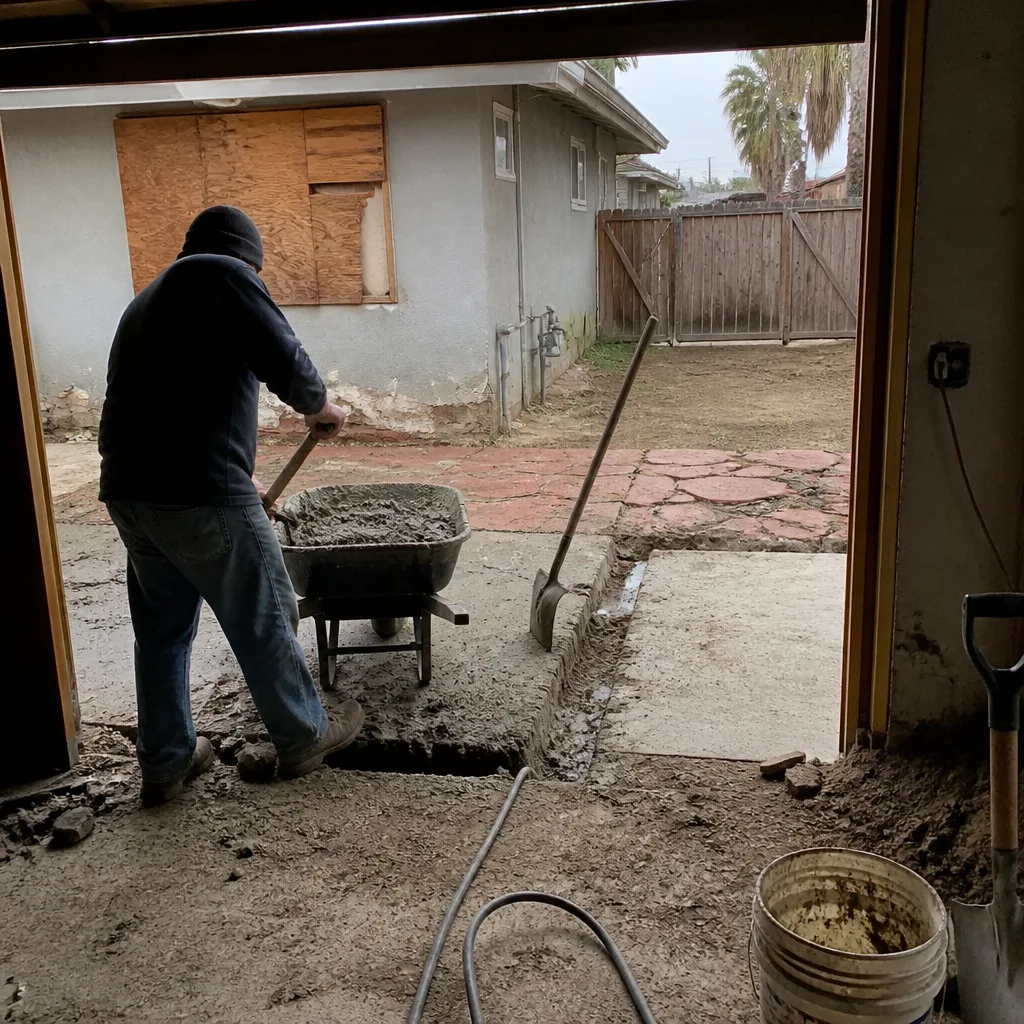 Before
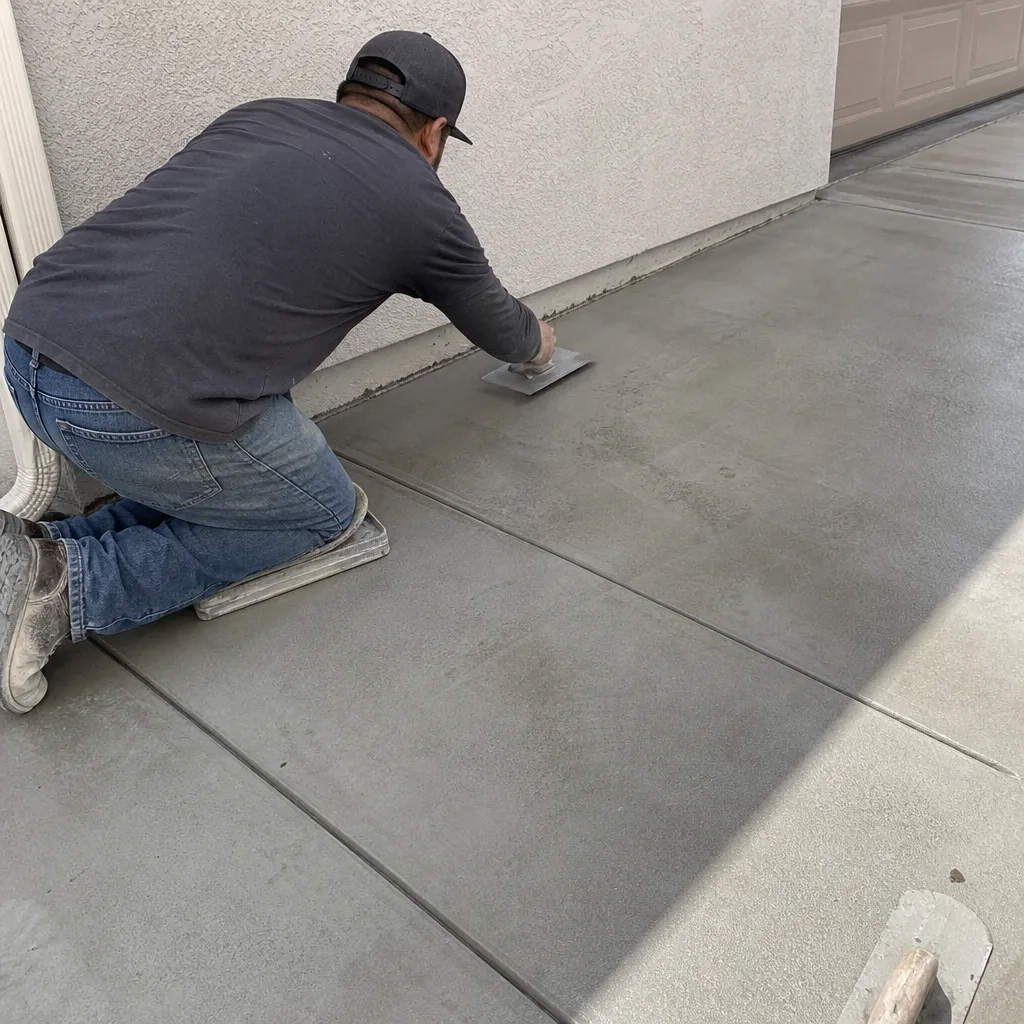 After
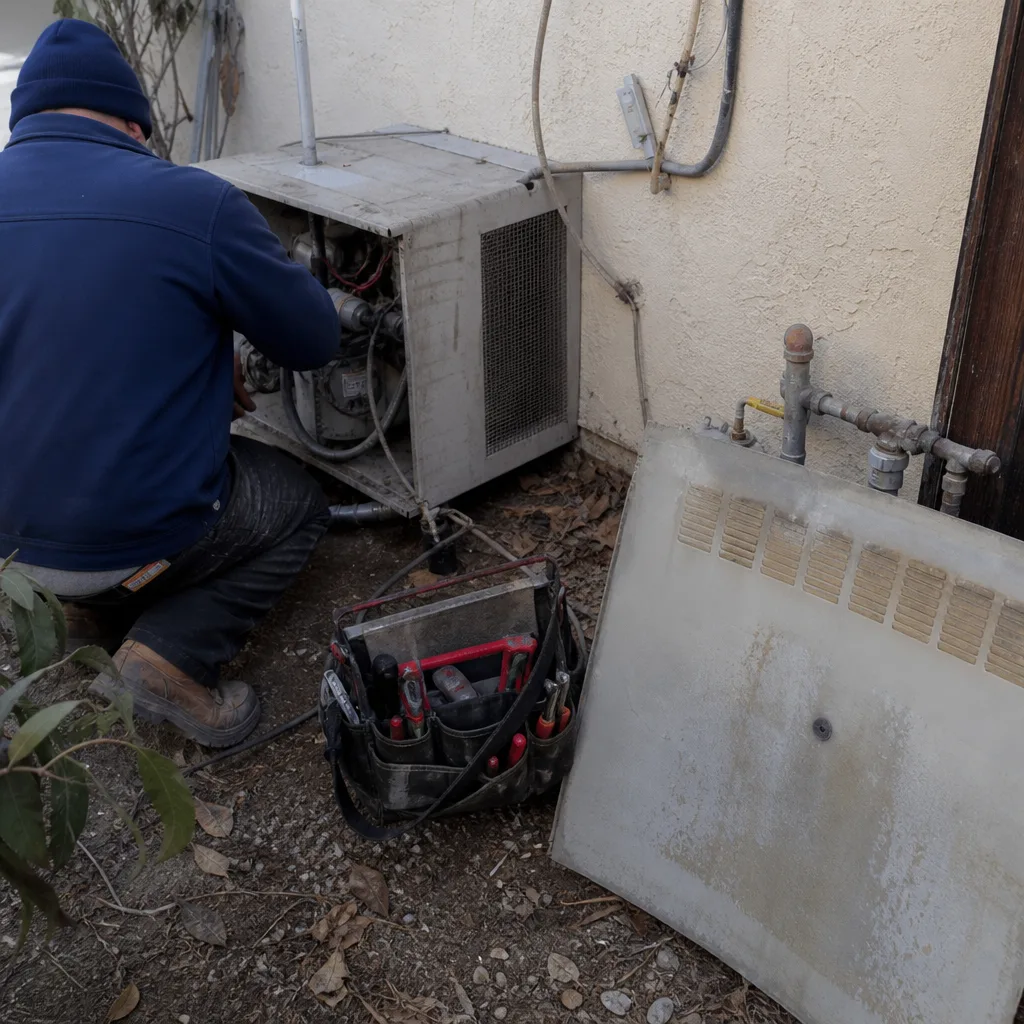 Before
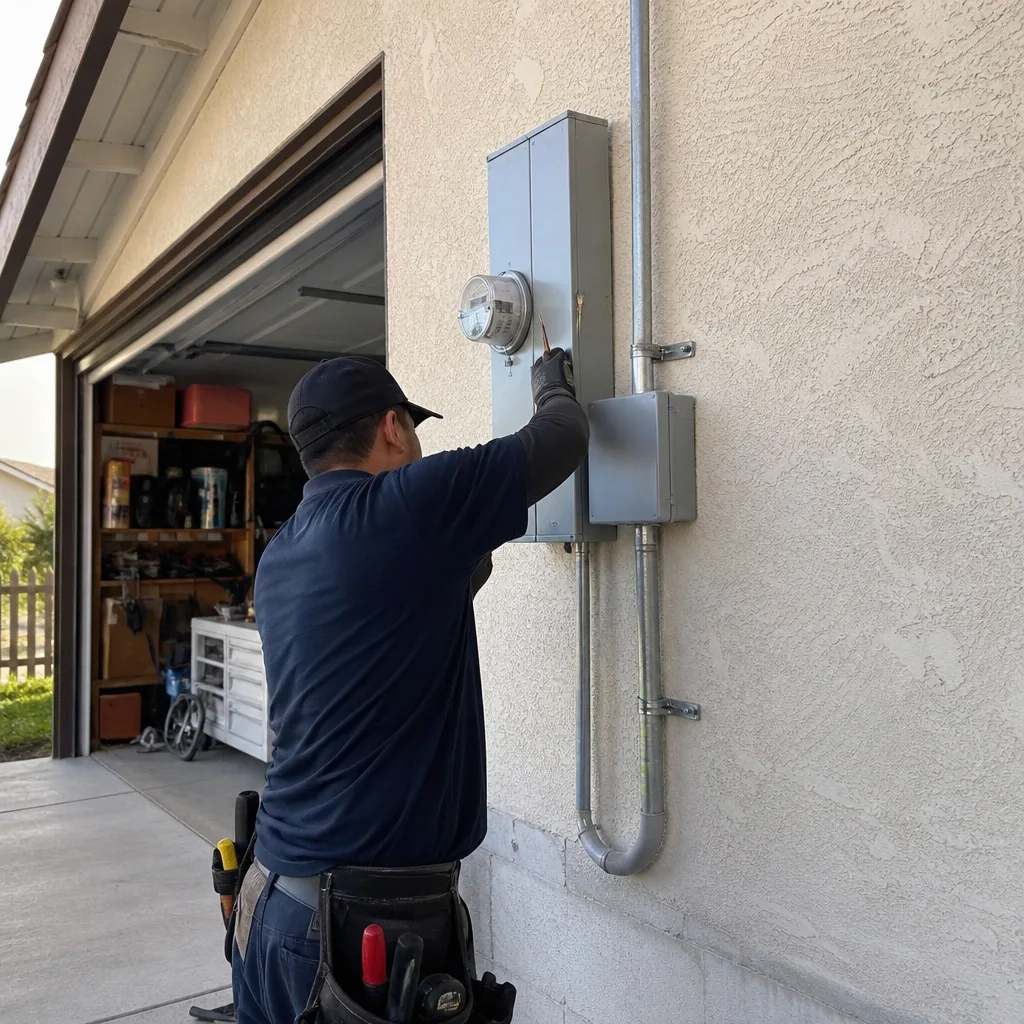 After
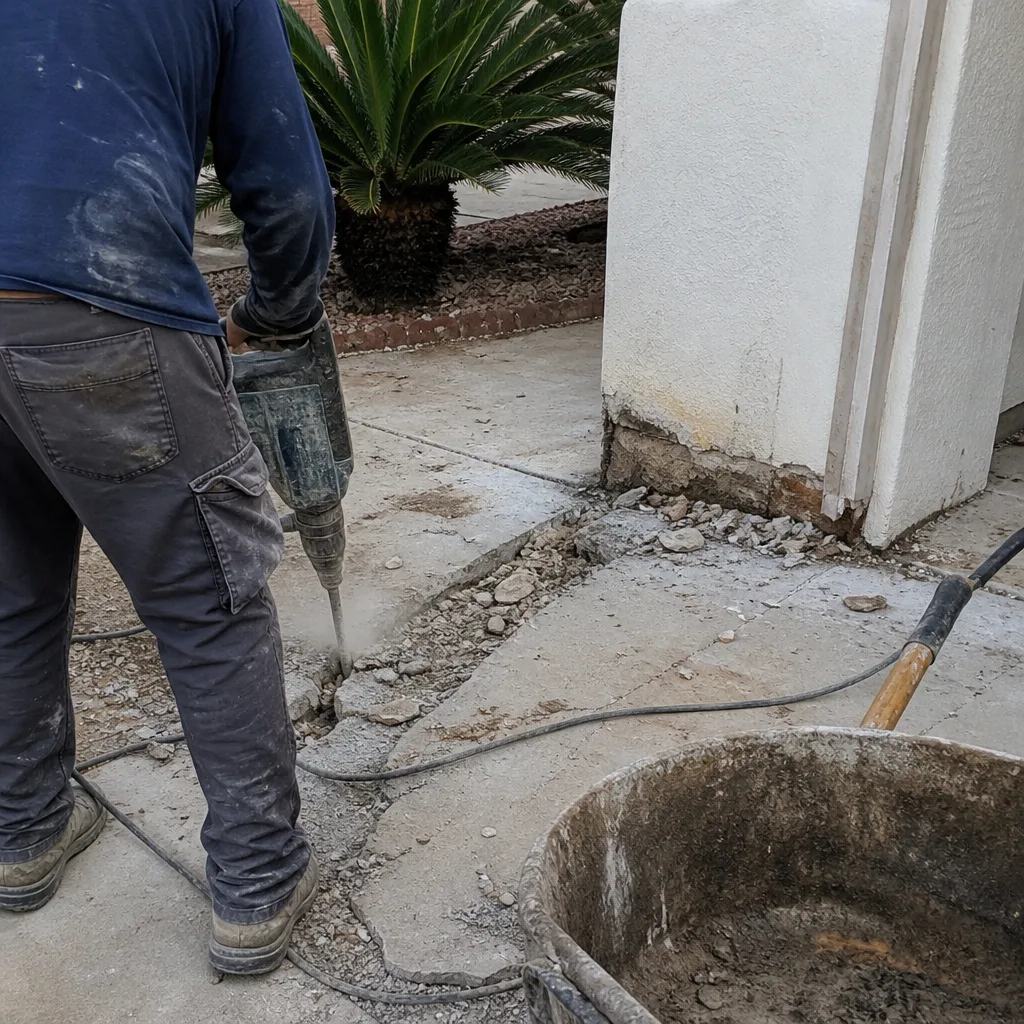 Before
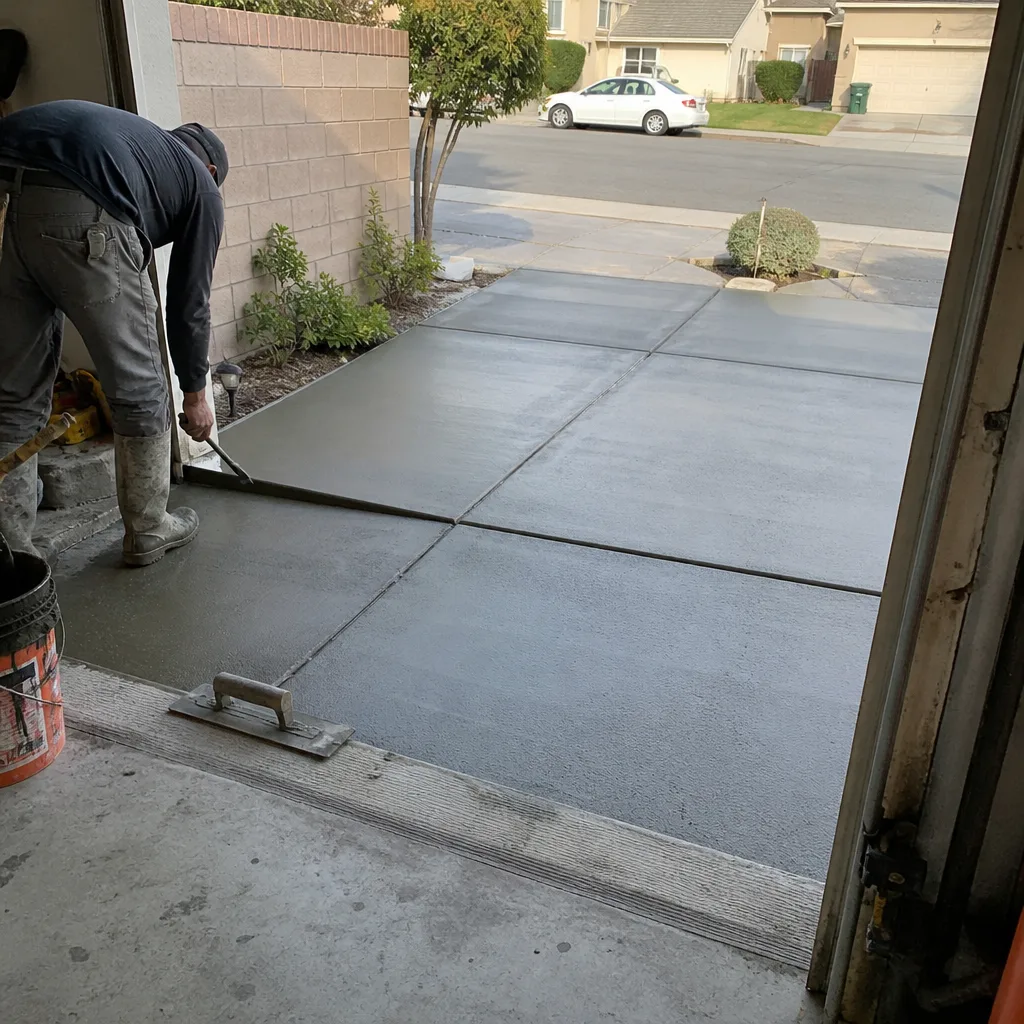 After
Windows, Doors, and Seal Integrity
Fontana’s windows and doors fight a three-way battle: UV radiation degrading seals and frames, Santa Ana winds testing structural integrity, and clay soil movement racking the openings from below. It’s a lot to ask of a fenestration system, and that’s why window and door maintenance deserves its own section.
The first thing to understand is that a window’s insulating gas – the argon or krypton between the panes – leaks gradually over time, and Fontana’s heat accelerates the seal failure that causes it. Once the seal fails, the window fogs between the panes, and the insulating value drops to roughly the same as a single-pane window. In August, that means more heat load on your AC. In January, it means cold spots near every window.
- Semi-annually: clean and inspect window seals and weatherstripping. Look for cracked or compressed weatherstripping around the sash, gaps where daylight shows through between the sash and the frame, and any visible condensation or fogging between the glass panes. Address seal issues before they affect energy efficiency.
- Annually: test every window for smooth operation. A window that binds is often the first sign of frame racking from clay soil movement. Note which specific windows are binding and whether it’s getting worse over time.
- Check door thresholds and sweeps. In Santa Ana season, the air pressure differential across your entry doors pulls dust and debris through any gap in the threshold or sweep. If you can see daylight under a door, you’re paying to condition air that’s leaking out and pulling in Fontana’s notoriously dusty air.
- Inspect exterior caulking around windows and doors. Fontana’s UV breaks down standard latex caulk in 3 to 5 years. Failed caulk lets water behind the stucco or siding during winter rain events and lets hot air infiltrate during summer. Use a UV-stable polyurethane or silicone caulk for replacements.
- For homes with impact windows or hurricane-rated products: If you have impact windows from PGT or CGI, their performance certification depends on proper installation and maintenance. Check the frames for any signs of warping or damage annually, and keep the tracks clean so the windows operate properly. For standard windows, this is still good practice.
We specify window replacements regularly in Fontana, and the demand driver is almost always the same: homeowners are tired of fighting the heat, and their windows are the weakest link in the thermal envelope. Single-pane aluminum windows from the 1960s and 1970s, which are common in older Fontana neighborhoods, have an R-value of about 1. A modern double-pane low-E window runs R-3 to R-5. When you’re comparing across a whole house, that’s the difference between an AC system that cycles and one that runs nonstop from June through September.
Exterior Materials: Siding, Fencing, and Pavers
Fontana’s exterior materials face a specific set of enemies: relentless UV, wind-driven dust and debris, occasional heavy rain concentrated in a few winter months, and clay soil that moves under everything. Each material category needs its own maintenance rhythm.
Siding and stucco: Concrete stucco is the dominant exterior finish in Fontana, and it’s generally a good choice for our climate. But it’s not maintenance-free. Stucco cracks as the underlying framing moves with soil expansion and contraction, and those cracks let water in during the rainy season. Inspect stucco annually, looking for cracks wider than a hairline, especially around window corners and where walls meet. Hairline cracks can be sealed with elastomeric caulk. Wider cracks or cracks that show displacement should be evaluated before water intrusion becomes a mold problem inside the wall cavity. If you have fiber-cement siding like James Hardie, the material itself resists UV degradation well, but the paint surface needs recoating roughly every 7 to 10 years in Fontana’s sun. Also check butt joints where panels meet – failed caulk at joints is the most common water intrusion point on fiber-cement homes.
Fencing: Wood fences in Fontana fail at the posts first, not the pickets. The post is set in clay soil that expands and contracts, and over time the post loosens in its concrete footing and begins to lean. Santa Ana winds then push against the full fence surface and accelerate the lean. Check fence posts annually for movement, especially on the windward side of your property. Vinyl fencing from manufacturers like Bufftech handles UV reasonably well but can become brittle after 10 to 15 years in Fontana’s sun, at which point a wind event that would leave a new fence standing can crack panels. Metal fencing from companies like Ameristar or Master Halco holds up well, but check gate posts and hinges specifically – gate posts take the most stress load and are usually the first to loosen.
Pavers and hardscaping: Interlocking concrete pavers from manufacturers like Belgard, Unilock, or Cambridge sit on a compacted base over Fontana’s expansive clay. Over time, the base erodes or the clay beneath shifts, and you see settling, gaps between pavers, or a paver surface that’s no longer level. The maintenance task is annual: walk your paver areas after each winter rain season and note any low spots, sunken areas, or pavers that have shifted. Early intervention – pulling up a few pavers and adding base material – is a few hundred dollars. Let a low spot go, and water pools there, which accelerates the underlying soil movement and eventually requires a full patio re-installation.
Common Mistakes to Avoid
- Checking the roof only after it leaks. By the time water is coming through your ceiling in Fontana, the roof has been failing for months. The UV damage and wind lifting happen long before the first drop penetrates.
- Ignoring hard water until fixtures fail. Fontana homeowners routinely replace faucets and shower heads that could have lasted 15 years with a simple aerator soaking routine and annual cartridge inspection.
- Skipping the post-wind-event roof check. A Santa Ana event that lifts a few shingles but doesn’t cause an immediate leak is a repair that costs $300. The same damage, ignored for six months, becomes a rotted deck and a $3,000 repair.
- Watering inconsistently near the foundation. Hand-watering when you remember is actually worse for clay soil than not watering at all. The expansion and contraction cycle from wet-dry-wet-dry is what causes differential movement. Use a timer.
- Doing licensed-trade work without a license. We see a lot of Fontana homeowners trying to save money by having a handyman do electrical, plumbing, or structural work. When it goes wrong, the material warranty is void, the insurance won’t cover it, and the repair cost is double.
- Deferring maintenance on “invisible” items. The water heater, the attic insulation, the drainage grade, the condensate line – these don’t look bad until they fail catastrophically. In Fontana’s climate, the invisible items are usually the ones that cause the most expensive failures.
When to Call a Professional
The line between DIY maintenance and licensed-contractor work comes down to one question: does the task involve structural integrity, electrical connections, gas, or roof penetrations? If yes, call a licensed contractor. A homeowner can remove and soak a faucet aerator. A homeowner should not re-flash a chimney. A homeowner can check that a door binds and note which direction. A homeowner should not begin excavating around a foundation. A homeowner can clean a condensate line. A homeowner should not open a refrigerant system, which legally requires EPA certification.
Here’s the practical rule: furniture, fixtures, finishes, and filters are yours. Structure, electrical, gas, roofing, and refrigerant are a contractor’s. If you’re not sure which category a task falls in, err toward the professional. Home remodeling in Fontana frequently starts with a maintenance issue that was deferred too long, and the cost difference between the early fix and the eventual remodel is rarely less than ten to one.
San Bernardino Contractors offers free estimates in Fontana. If you’re looking at a maintenance item and wondering whether it’s a $200 repair or a $20,000 problem, call (855) 473-5620. We’ll tell you straight either way.
Frequently Asked Questions
Fontana homeowners should inspect their roof twice a year – once in late September or early October before Santa Ana season, and once in March after the winter rain events – plus a quick visual check after any wind event over 40 mph. The combination of UV index near 11 in summer and seasonal wind gusts means Fontana roofs take more stress than most California climates.
The drainage grade around the foundation. Most Fontana homeowners don’t realize that the slope away from their stem wall has flattened over years of settling and landscaping, and they only find out when a heavy rain event causes localized clay expansion and a door starts sticking or a crack appears. Checking and correcting drainage grade is a $500 to $1,500 fix that prevents five-figure foundation damage. Call (855) 473-5620 if you suspect your grade has flattened.
Yes. Hard water in Fontana affects water heaters, washing machines, dishwasher heating elements, tile grout, shower valves, toilet mechanisms, and even your plumbing pipes over decades. The mineral scale builds up in every surface it touches. A whole-house water softener is typically the most effective long-term solution, but a regular maintenance routine on fixtures and grout can significantly extend their lifespan if a softener isn’t in the budget.
Normal clay soil movement causes seasonal door sticking, hairline drywall cracks, and small stucco cracks that open and close with the seasons. Problem movement causes doors that stay stuck, cracks that grow consistently, stair-step cracking in masonry, and visible displacement where one side of a crack is higher or lower than the other. If you’re seeing the second set of symptoms, especially in multiple rooms, it’s time for a professional foundation evaluation.
Roof repairs or flashing work, any electrical work beyond changing a light fixture, any plumbing beyond fixture-level maintenance, HVAC work involving refrigerant, structural repairs, and foundation evaluation all require a licensed contractor. Doing these as DIY or hiring an unlicensed handyman voids material warranties from manufacturers like Owens Corning and James Hardie, and can create safety hazards and insurance coverage gaps. Home renovation in Fontana projects often involve multiple trades that require licensed specialists.
April and October. April catches pre-summer HVAC and insulation issues before the heat peaks. October catches pre-Santa-Ana roof and exterior issues before wind season starts. Doing both gives you a full annual cycle, and each walkthrough takes about two hours if you know what you’re looking for.
The Bottom Line
Fontana’s maintenance reality is simple: the climate here is tough on houses, and the homeowners who stay ahead of it spend a fraction of what the homeowners who ignore it end up paying. The checklist is not complicated. Check your roof before wind season. Treat your hard water like the slow-moving problem it is. Watch your doors, your drainage, and your foundation for clay soil signals. Service your HVAC before summer, and your attic insulation is doing more work than you think. The difference between a $150 maintenance item and a $15,000 repair is almost always just a matter of catching it early.
If you work through this checklist and find items you’re not sure about, we’re happy to help. San Bernardino Contractors home is your starting point for anything from a single trade repair to a whole general contracting project in Fontana. We handle the full scope – roofing, windows, siding, kitchens, baths, ADUs, and hardscaping – with single-point accountability across every trade. You can reach us at (855) 473-5620 to schedule a free estimate and get answers you can actually work with.
Written by the team at San Bernardino Contractors, serving Fontana since 2015.